|
Buchhandlung Heesen | Versandbuchhandlung für Evangelische Theologie |
Impressum |
| Freudenstadt / Loßburg | Datenschutzhinweise | ||
| Tel. 07446 952 418 1 |
|
Buchhandlung.Heesen@t-online.de | |
| Da unsere Angebote manuell erstellt werden und während des Seitenaufrufes keine Verbindung zu einer Buchdatenbank aufgebaut wird prüfen wir die Verkaufspreise bei Rechnungsstellung auf Richtigkeit und berechnen den gesetzlich festgelegten Buchpreis. Falls sich dadurch eine Preiserhöhung ergibt werden wir Sie vor Versand informieren, Sie können dann diesem Preis zustimmen oder vom Kauf zurücktreten. Hinweise zum Datenschutz und Cookies | |||


|
Journal of Ancient Judaism (JAJ), Vandenhoeck & Ruprecht |
|
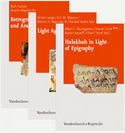 bei Subskription  ca 10 % Ermäßigung ca 10 % Ermäßigung |
The Journal of Ancient Judaism (JAJ)
addresses all issues of Jewish literature, culture, religion, and
history from the Babylonian exile until the Babylonian Talmud. As a
cross disciplinary journal it is of interest for all those concerned
with Biblical, Jewish, religious, cultural and historical studies. JAJ
focuses on contributions which cover more wide ranging topics but are
argued in detail nevertheless. It hence encourages the submission of
extensive articles (up to 80 pages). JAJ will appear three times per
year. Each issue of approx. 140 pages will comprise an article section
of 120 pages and a review section of 20 pages. Each year, JAJ will
include one theme issue which will be dedicated to issues and or text
which are at the cutting edge of Jewish studies. The articles section
aims to publish articles dedicated to questions and themes in each of
the periods addressed by the journal. The review section aims at
comprehensiveness and will review about 200 books each year. For each
book a brief summary of a quarter to a third of printed page will be
given, which highlights its most important achievements. The most
important books (one or two per year) will be discussed in extensive
review article of approx. 10 pages. As a peer reviewed journal
submissions to JAJ will be reviewed anonymously by members of the
journal’s advisory board. Submissions are accepted in English, German,
and French although the majority of the published articles will be
written in English. Maxine L. Grossman is Associate Professor of Jewish Studies and Religious Studies at the University of Maryland. Her teaching responsibilities include Hebrew Bible, Dead Sea Scrolls, and Second Temple Judaism; Judaism and gender; and introductory and upper level courses on religious studies, world religions, and methods and theories in the study of religion. Her most recent research addresses the Dead Sea Scrolls from the perspective of gender studies. Armin Lange is Professor of Second Temple Judaism and Director of the Institute for Jewish Studies at the University of Vienna. His classes cover the timespan from the beginnings of Israel and Judah until the Second Jewish war. In his research he specializes on Israel’s sapiential and prophetic literature, as well as the Dead Sea Scrolls and the canonical and textual history of the Hebrew Bible. He is a member of the international team editing the Dead Sea Scrolls. |
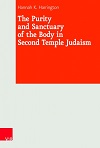 |
Hannah K. Harrington The Purity and Sanctuary of the Body in Second Temple Judaism Vandenhoeck & Ruprecht, 2019, 488 Seiten, hardcover, 978-3-525-57128-6 120,00 EUR |
Journal of Ancient Judaism
Vol 33 This study traces the emergence of the concept of the body as a sanctuary from its biblical roots to its expressions in late Second Temple Judaism. Harrington‘s hypothesis is that the destruction of the first Jerusalem temple was a catalyst for a new reality vis-à-vis the temple and the emergence of increased emphasis on the holiness of the people along with concomitant standards of purity in a certain stream of Judaism. The study brings into relief elements of this attitude from exilic texts, e.g. Ezekiel, to Ezra-Nehemiah, the Dead Sea Scrolls and other Second Temple Jewish texts, including early Jesus and Pauline traditions. The goal is to provide a history of the concept of the body-cum-temple metaphor which comes to its fullest expression in the letters of Paul to the Corinthians. The concept of the body as a sanctuary as it comes to fruition in late second temple Judaism must be understood within the conceptual world of Jewish holiness of the time. The metaphor of the temple provides a frame of reference but only a close analysis of the concepts of holiness, purity, and impurity and the dynamics between them can provide depth and distinction. Of particular importance, critical to proper understanding of the temple metaphor, are the notions of the elect, holy status of Israel and its possible desecration by wrongful sexual relations, the loss of the temple and the ripple effect of creating at least temporary substitutes for processes of the cult, the widespread concern in Second Temple Judaism for ritual purity in support of greater holiness, and a desire among Jews for the residence and agency of the spirit of holiness. Leseprobe |
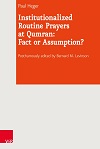 |
Paul Heger Institutionalized Routine Prayers at Qumran: Fact or Assumption? Vandenhoeck & Ruprecht, 2019, 288 Seiten, hardcover, 978-3-525-57131-6 120,00 EUR |
Journal of Ancient Judaism
Vol 32 This book challenges scholars’ assumption, without any explicit evidence, of institutionalized public prayer with fixed contents and times in the Qumran community. As the book observes, this assumption rests in part on a failure to distinguish between voluntary supplication prayers and biblically mandated blessings and thanks. The book closely examines the three Qumran writings assumed to typify prayer and critiques scholars’ attempts to deduce the existence of public prayer from these and other sources, which are most likely pious expressions of individual authors. The lack of indispensable instructions for institutionalized prayer offers circumstantial evidence that such prayer was not practiced at Qumran. This study also explores the assumption that Qumran prayer was intended as a substitute for sacrifices after the group’s separation from the temple cult and discusses relevant rabbinic statements. The innovative character of rabbinic fixed prayer is discussed and identified as an element of the fundamental transformation of Jewish theology and practice from worship founded on sacrificial rituals performed by priests at the Jerusalem Temple to abstract, unmediated, direct approaches to God by every Jew in any location. The book also examines Samaritan prayer and detects a variety of attitudes, rules, and customs similar to those found at Qumran that are incompatible with their rabbinic counterparts. This opens the door for investigating religious belief and practice at a crucial period in the history of Western civilization, namely, before the vast rabbinic reform of Judaism after 70 CE. Leseprobe |
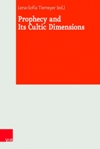 |
Lena-Sofia Tiemeyer Prophecy and Its Cultic Dimensions Vandenhoeck & Ruprecht, 2018, 208 Seiten, hardcover, 978-3-525-57086-9 89,00 EUR |
Journal of Ancient Judaism
Vol 31 This collection of eight essays deals with a wide range of historical, literary, and methodological issues. First, what were the links between the cultic and the prophetic personnel? Did prophets have ritual/cultic functions in temples? Did prophetic actions and/or utterances play a role in the performance of the cult? What were the ritual aspects of divinations? Second, how do literary texts describe the interaction between prophecy and cult? Third, how can various theories (e.g. religious theory, performance theory) enable us to reach a better understanding of the interplay between divination and cultic ritual in ancient Israel and the wider ancient Near East? Marian Broida explores the ritual elements as described in the biblical accounts of intercession. Lester Grabbe revisits the important question of whether cultic prophecy existed in the Jerusalem temple in ancient Israel. Anja Klein maintains that while Psalms 81 and 95 may indirectly testify to a form of cultic prophecy, they do not themselves constitute cultic prophecy. Jonathan Stökl discusses the notion of “triggering” prophecy and suggests that enquiring of Yhwh may in itself be understood as a kind of ritualised behaviour. John Hilber considers the performance of the rituals that accompanied prophetic affirmation of victory in the Egyptian cult. Martti Nissinen looks more broadly at the question whether prophets in the ancient world functioned as ritual performers. Lena-Sofia Tiemeyer investigates the priests’ mediating and predictive functions as depicted in the Deuteronomistic History. Alex Jassen argues that Jews in the Second Temple Period perceived the priests and the temple to be a new locus of prophetic activity. Leseprobe |
 |
Tzvi Novick Piyyut and Midrash Form, Genre, and History Vandenhoeck & Ruprecht, 2018, 240 Seiten, hardcover, 978-3-525-57080-7 110,00 EUR |
Journal of Ancient Judaism
Vol 30 Novick studies the relationship between rabbinic midrash and classical (and to a lesser extent pre-classical) piyyut. The first focuses on features of piyyut that distinguish it, at least prima facie, from rabbinic midrash: its performative character, its formal constraints, and its character as prayer. The second part considers midrash and piyyut together via an analysis of a narrative form that looms large in both corpora. The “serial narrative” is a narrative that binds biblical history together by stringing together instance of the “same” event across multiple time periods. Thereby, Novick surveys basic features of serial narratives in midrash and piyyut. Subsequent chapters take up instance of specific serial narrative forms from Second Temple literature to piyyut: the kingdom series, the salvation history, and the serial confession. Together, the two parts yield a nuanced account of the continuities and discontinuities between the two great corpora produced by rabbinic and para-rabbinic circles in Roman Palestine. Leseprobe |
 |
Bronson Brown-deVost Commentary and Authority in Mesopotamia and Qumran Vandenhoeck & Ruprecht, 2018, 312 Seiten, hardcover, 978-3-525-54072-5 110,00 EUR |
Journal of Ancient Judaism
Vol 29 How did the written word serve as an authoritative source in the ancient world? What does it mean that some works became so popular as to merit dedicated interpretive commentaries? And does any direct relationship exist between the various methods of interpretation and styles of composition in these commentaries? The present work sets out to provide some solid answers to such questions. At the heart of this book stands a comparative analysis of ancient cuneiform commentary texts from mid-to-late first millennium Mesopotamia and early Jewish commentaries—known as pesharim—from the turn of the common era found in caves near Khirbet Qumran. Though some aspects of Mesopotamian hermeneutics may have influenced Jewish exegesis, likely through Jewish Aramaic scribes, the actual Mesopotamian practice of composing commentary texts exerted little-to-no influence on the compositional techniques of the pesharim. Nevertheless, many textual difficulties in the Qumran pesharim can be explained as the result of an accretion of interpretations over an extended period of time—a practice detailed in the textual record of the Mesopotamian commentaries. What is more, these commentaries reveal important evidence about both the way in which and the extent to which such works functioned as authoritative sources. As a result, this book advocates a shift away from discussing textual authority in simple binary terms, both in ancient and modern contexts, to functional descriptions of literary authority. Leseprobe Dr. Bronson Brown-deVost, PhD, is Post-doc-Researcher in the German-Israeli Joint project “Scripta Qumranica Electronica” at the University of Göttingen and was Lecturer for Near Eastern and Judaic Studies at Brandeis University in Waltham/USA. |
 |
Michaela Bauks Gender and Social Norms in Ancient Israel, Judaism and Christianity: Texts and Material Culture Vandenhoeck & Ruprecht, 2018, 424 Seiten, with ca. 55 fig., hardcover, 978-3-525-55267-4 140,00 EUR |
Journal of Ancient Judaism
Vol 28 The aim of the present conference volume is to study the interrelationship of literary and material approaches to historical investigation of gender. Paradigmatically the significance and meaning of gender and sexuality is explored in the context of private and public, religious and secular spaces. Historical, cultural, and social norms (and deviations) of daily life are examined through the lens of textual, archaeological, and art historical investigations to interpret relics of ancient Israelite, Jewish, and Christian communities from the Iron Age through Late Antiquity. Scholars from varied disciplines such as biblical and classical archaeology, epigraphy, Old and New Testament exegesis and religious studies assembled to engage in a dialogue involving both texts and material culture. Leseprobe |
 |
J. Cornelis de Vos You Shall Not Kill The Prohibition of Killing in Ancient Religions and Cultures Vandenhoeck & Ruprecht, 2017, 320 Seiten, 4 Abbildungen, hardcover, 978-3-525-55268-1 110,00 EUR |
Journal of Ancient Judaism
Vol 27 Die Tötung von Menschen wird in vielen biblischen Texten thematisiert. Locus classicus ist das Tötungsverbot im Dekalog (Ex 20,13; Dtn 5,17). Im Kontext von Krieg oder als Strafe für schwerwiegende Verbrechen erschien die Tötung eines Menschen für die Verfasser der biblischen Texte wohl kaum problematisch. Gott selbst wird als jemand beschrieben, der das Töten von Personen anordnet und Menschen töten für ihn. Manchmal ist es sogar Gott selbst, der tötet. Andere biblische Aussagen und Traditionen sperren sich gegenüber dieser Sicht: Wurde der Mensch nicht nach dem Bild Gottes geschaffen (Gen 1,26-27; 9,6)? Die Gottähnlichkeit des Menschen impliziert das Verbot, einen Menschen zu töten. In diesem Kontext steht bekanntlich auch das 5. Gebot des Dekalog: „Du sollst nicht töten!“ Die zentrale Frage des vorliegenden Bandes ist, ob und wie biblische und nicht-biblische Tötungsverbote als Norm in der Antike funktionieren. Beiträge aus den Bereichen des altorientalischen und antiken Rechts, der Bibelwissenschaft, der alten Geschichte, des antiken Judentums und der frühen Kirchengeschichte geben Einblicke in diese bis heute aktuelle Thematik. Fachkundige Experten behandeln das Tötungsverbot, indem sie die zentralen Frage- und Problemstellungen, die sich in altorientalischer, patristischer und mittelalterlicher Zeit unterschiedlich darstellen, kritisch beleuchten und diskutieren. Inhaltsverzeichnis und Leseprobe |
 |
Lance R. Hawley Metaphor Competition in the Book of Job Vandenhoeck & Ruprecht, 2018, 260 Seiten, 4 Abbildungen, hardcover, 978-3-525-53135-8 110,00 EUR |
Journal of Ancient Judaism
Vol 26 Within the book of Job, the interlocutors (Job, the friends, and Yahweh) seem to largely ignore one another’s arguments. This observation leads some to propose that the dialogue lacks conceptual coherence. Lance Hawley argues that the interlocutors tangentially and sometimes overtly attend to previously stated points of view and attempt to persuade their counterparts through the employment of metaphor. Hawley uses the theoretical approach of Conceptual Metaphor Theory to trace the concepts of speech and animals throughout the dialogue. Beyond explaining the individual metaphors in particular texts, he shows how speech metaphors compete with one another, most perceptibly in the expressions of job’s words are wind. With regard to animal metaphors, coherence is especially perceptible in the job is a predatory animal metaphor. In these expressions, the dialogue demonstrates intentional picking-up on previously stated arguments. Hawley argues that the animal images in the divine speeches are not metaphorical, in spite of recent scholarly interpretation that reads them as such. Rather, Yahweh appears as a sage to question the negative status of wild animals that Job and his friends assume in their significations of people are animals. This is especially apparent in Yahweh’s strophes on the lion and the wild donkey, both of which appear multiple times in the metaphorical expressions of Job and his friends. |
 |
Claudia Rapp The Bible in Byzantium Vandenhoeck & Ruprecht, 2018, 300 Seiten, hardcover, 978-3-525-57068-5 95,00 EUR |
Journal of Ancient Judaism
Vol 25,6 Appropriation, Adaptation, Interpretation The Bible is the foundational text for the Byzantine Empire. The papers of this volume explore its reception through appropriation, adaptation and interpretation as articulated in all aspects of Byzantine society. Several sessions at the ISBL held in Vienna, 6 to 10 July 2014 on ‘The Reception of the Bible in Greco-Roman Tradition,’ ‘The Bible between Jews and Christians in Byzantium,’ ‘Biblical Scholarship in Byzantium,’ and ‘Biblical Foundations of Byzantine Identity and Culture’ built the basis of this volume. Various angles shed light on the Byzantine experience of the Bible. The wide range of source materials that inform the contributions to this volume—from manuscripts and military handbooks to lead seals and pilgrim guides— allows insights into a vivid liturgical tradition, which shapes Orthodox Christianity up today. As a thoroughly Christianized society, the Bible had sunk deep into the cultural DNA of Byzantium. The volume shows the multitude of strategies for the engagement with the Biblical text and the manifold ways in which the Bible message was experienced, articulated and brought to life on a daily basis. Leseprobe |
 |
Agnethe Siquans Biblical Women in Patristic Reception / Biblische Frauen in patristischer Rezeption Vandenhoeck & Ruprecht, 2017, 300 Seiten, hardcover, 978-3-525-55270-4 120,00 EUR |
Journal of Ancient Judaism
Vol 25,5 Biblische Frauen spielen eine bedeutende Rolle in verschiedenen Genres patristischen Schrifttums und in rabbinischen Texten: Etwa als Vorbilder für Frauen, manchmal auch für Männer, als Repräsentantinnen bestimmter Tugenden oder Laster, als Autoritäten in Streitfragen, als Ausgangspunkt für bestimmte Praktiken. Die Bilder, die die (fast immer männlichen) Autoren von den biblischen Frauen zeichnen, spiegeln stets den zeitgenössischen sozialen, kulturellen und religiösen Kontext wider, besonders im Hinblick auf weit verbreitete antike Vorstellungen über Frauen und über das Verhältnis der Geschlechter zueinander. Der Sammelband fragt nach der Präsenz und Sichtbarkeit bzw. Hörbarkeit und nach dem Bild biblischer Frauen in den spätantiken Texten. Er enthält Beiträge zu Rahab, zur ägyptischen Frau des Salomo, zur Geliebten des Hoheliedes, zu Judit, den vier Töchtern des Philippus und den Myrophoren der Evangelien, die Salben zu Jesu Grab bringen, und untersucht die Rezeption dieser biblischen Frauen in verschiedenen patristischen und rabbinischen Texten. Inhaltsverzeichnis und Leseprobe Corrigendum |
 |
Armin Lange Reception of the Bible in Ancient Judaism and Christianity Vandenhoeck & Ruprecht, 2019, 200 Seiten, ca. 52 Farbabb., hardcover, 978-3-525-55269-8 90,00 EUR |
Journal of Ancient Judaism
Vol 25,1 Reading the Bible is of key importance for Judaism and Christianity. By way of examples, the contributions to this volume engage with the whole width of the reception histories of the Jewish and Christian Bibles. The literatures its contributions study range from the Dead Sea Scrolls into Rabbinic and Patristic literature. In addition to the literary reception history of biblical texts, this volume also engages with the reception of the Bible in Jewish and Christian art history. To generate a broad insight each area is addressed by one or more examples, contributed by prominent international scholars. In addition they illuminate what unites and what divides Judaism and Christianity in their readings of Holy Scriptures.A study on Jeremiah 33:14-26 and its reception in Judaism and Christianity opens the volume, followed by one on the reception of the bible in Ancient Judaism. Further discussions of receptions from different contexts such as rabbinic Literature or Patristic Biblical Interpretation of sections of the bible spread the viewed discourse.Concluding a study on the bible in (late) antique Christian art changes the medium and takes a look at selected textiles. |
 |
Katell Berthelot In Search of the Promised Land? Vandenhoeck & Ruprecht, 2017, 448 Seiten, hardcover, 978-3-525-55252-0 120,00 EUR |
Journal of Ancient Judaism
Vol 24 The Hasmonean Dynasty Between Biblical Models and Hellenistic Diplomacy Katell Berthelot shows that the Hasmonean wars of conquest should not merely be understood in light of Biblical models, but within the context of Hellenistic diplomacy and kingship. Katell Berthelot challenges the widespread consensus that the Hasmoneans embarked on wars of conquest in order to reconquer the Promised Land, the biblical Land of Israel. She shows that the sources used in support of this consensus - such as 1 Maccabees - have been over-interpreted and suggests a different approach. Although the Hasmoneans used Biblical models in order to legitimate their dynasty, there are many aspects of their policies that should be understood within the context of Hellenistic diplomacy and kingship. Dr. Katell Berthelot is Professor at the Centre National de la Recherche Scientifique in Aix-en-Provence, France. Potential Audience: Scholars and students in Bible Studies, Jewish Studies, Ancient History. |
 |
Hanna Tervanotko Denying Her Voice: The Figure of Miriam in Ancient Jewish Literature Vandenhoeck & Ruprecht, 2016, 368 Seiten, hardcover, 978-3-525-55105-9 100,00 EUR |
Journal of Ancient Judaism
Vol 23 Hanna Tervanotko first analyzes the treatment and development of Miriam as a literary character in ancient Jewish texts, taking into account all the references to this figure preserved in ancient Jewish literature from the exilic period to the early second century C.E.: Exodus 15:20-21; Deuteronomy 24:8-9; Numbers 12:1-15; 20:1; 26:59; 1 Chronicles 5:29; Micah 6:4, the Septuagint, the Dead Sea Scrolls (4Q365 6 II, 1-7; 4Q377 2 I, 9; 4Q543 1 I, 6 = 4Q545 1 I, 5; 4Q546 12, 4; 4Q547 4 I, 10; 4Q549 2, 8), Jubilees 47:4; Ezekiel the Tragedian 18; Demetrius Chronographer frag. 3; texts by Philo of Alexandria: De vita contemplativa 87; Legum allegoriae 1.76; 2.66-67; 3.103; De agricultura 80-81; Liber antiquitatum biblicarum 9:10; 20:8, and finally texts by Josephus: Antiquitates judaicae 2.221; 3.54; 3.105; 4.78. These texts demonstrate that the picture of Miriam preserved in the ancient Jewish texts is richer than the Hebrew Bible suggests. The results provide a contradictory image of Miriam. On the one hand she becomes a tool of Levitical politics, whereas on the other she continues to enjoy a freer role. People continued to interpret earlier literary traditions in light of new situations, and interpretations varied in different contexts. Second, in light of poststructuralist literary studies that treat texts as reflections of specific social situations, Tervanotko argues that the treatment of Miriam in ancient Jewish literature reflects mostly a reality in which women had little space as active agents. Despite the general tendency to allow women only little room, the references to Miriam suggest that at least some prominent women may have enjoyed occasional freedom. Inhaltsverzeichnis und Leseprobe |
 |
Christine Hayes The Faces of Torah Studies in the Texts and Contexts of Ancient Judaism in Honor of Steven Fraade Vandenhoeck & Ruprecht, 2017, 672 Seiten, hardcover, 978-3-525-55254-4 170,00 EUR |
Journal of Ancient Judaism
Vol 22 This volume is a festschrift in honor of Steven Fraade, the Mark Taper Professor of the History of Judaism at Yale University. The contributions to the volume, written by colleagues and former students of Professor Fraade, reflect many of his scholarly interests. The scholarly credentials of the contributors are exceedingly high. The volume is divided into three sections, one on Second Temple literature and its afterlife, a second on rabbinic literature and rabbinic history, and a third on prayer and the ancient synagogue.Contributors are Alan Applebaum, Joshua Burns , Elizabeth Shanks Alexander , Chaya Halberstam , John J. Collins, Marc Bregman, Aharon Shemesh, Ishay Rosen-Zvi, Vered Noam, Robert Brody, Albert Baumgarten, Marc Hirshman, Moshe Bar-Asher, Aaron Amit, Yose Yahalom, Lee Levine, Jan Joosten, Daniel Boyarin, Charlotte Hempel, David Stern, Beth Berkowitz, Azzan Yadin, Joshua Levinson, Elitzur Bar-Asher Siegal, Michal Bar-Asher Siegal, Tzvi Novick, Devora Diamant, Richard Kalmin, Carol Bakhos, Judith Hauptman, Jeff Rubenstein, Martha Himmelfarb, Stuart Miller, Esther Chazon, James Kugel, Chaim Milikowsky, Maren Niehoff, Peter Schaefer, and Adiel Schremer. |
 |
Betsy Halpern-Amaru The Perspective from Mt. Sinai: The Book of Jubilees and Exodus Vandenhoeck & Ruprecht, 2015, 192 Seiten, 18 tables, hardcover, 978-3-525-55095-3 100,00 EUR |
Journal of Ancient Judaism
Vol 21 Although termed “the little Genesis”, the Book of Jubilees is significantly engaged with Exodus. It reworks key Exodus narratives, develops modules of Exodus law, and highlights Exodus motifs. The most fundamental connection to Exodus is the grounding of the two narrational structures of Jubilees in the scenario of Moses receiving a revelation on Mt. Sinai. In the frame an anonymous narrator develops the Mt. Sinai setting of the work. In the body an angel employs that setting as the present-time pivot for a retrospect that moves backward and forward in time. Focusing on the intersection of structure and content, the study explores the relationship between the retrospective design of the angel narration and the exegesis. The approach is a literary one that treats Jubilees as a unitary text that may reflect the work of a single author or of a final editor. The analysis draws particular attention to manipulations of temporal and textual perspective that transform Exodus narratives, facilitate the hermeneutical elaborations of Exodus law, and effect cohesion in the revelation that is the Book of Jubilees. Halpern-Amaru’s study makes a significant contribution to our understanding of biblical interpretation in Second Temple Judaism. For example, the reading of the Jubilees narrative of the exodus as a revelation of how God uses His heavenly forces, i.e., Mastema and his demons as well as the angels of the presence, on behalf of Israel, has implications for the understanding of strategies that temper dualism in Second Temple Judaism. Inhaltsverzeichnis und Leseprobe Betsy Halpern-Amaru is Professor Emeritus of Religion at Vassar College, Poughkeepsie, NY. |
 |
Marvin Lloyd Miller Performances of Ancient Jewish Letters From Elephantine to MMT Vandenhoeck & Ruprecht, 2015, 317 Seiten, hardcover, 978-3-525-55093-9 140,00 EUR |
Journal of Ancient Judaism
Vol 20 This ambitious and engaging book sets itself the task of combining a wide range of approaches to cast new light on the form and function of several ancient Jewish letters in a variety of languages. The focus of The Performance of Ancient Jewish Lettersis on applying a new emerging field of performance theory to texts and arguing that letters and other documents were not just read in silence, as is normal today, but were “performed,” especially when they were addressed to a community. A distinctive feature of this book consists of being one of the first to apply the approach of performance criticism to ancient Jewish letters. Previous treatments of ancient letters have not given enough consideration to their oral context; however, this book prompts the reader to “listen” sympathetically with the audience. The Performance focuses close attention on the ways in which the engagement of the audience during the performance of a text might be read from traces present in the text itself. This book invites the audience to hear a fresh reading of a family letter from Hermopolis, concerning ugly tunics and castor oil; festal letters, about issues surrounding the celebration of Passover, Purim and Hanukkah; a diaspora letter on how to live in a foreign land; and also an official letter concerning the building of the Jerusalem temple. These letters will help us understand a text from the Dead Sea Scrolls, namely, MMT. Marvin L. Miller argues for the centrality of performance in the life of Jews of the Second Temple period, an area of study that has been traditionally neglected. The Performanceadvances the fields of orality and epistolography and supplements other scholars’ works in those fields. Inhaltsverzeichnis und Leseprobe Marvin Lloyd Miller, PhD, is Adjunct Professor at Summit Pacific College in Abbotsford, British Columbia, Canada. |
 |
Andrew Perrin The Dynamics of Dream-Vision Revelation in the Aramaic Dead Sea Scrolls Vandenhoeck & Ruprecht, 2015, 312 Seiten, harcdover, 978-3-525-55094-6 140,00 EUR |
Journal of Ancient Judaism
Vol 19 With a foreword by Florentino García Martínez Among the predominantly Hebrew collection of the Dead Sea Scrolls are twenty-nine compositions penned in Aramaic. While such Aramaic writings were received at Qumran, these materials likely originated in times before, and locales beyond, the Qumran community. In view of their unknown past and provenance, this volume contributes to the ongoing debate over whether the Aramaic texts are a cohesive corpus or accidental anthology. Paramount among the literary topoi that hint at an inherent unity in the group is the pervasive usage of the dream-vision in a constellation of at least twenty writings. Andrew B. Perrin demonstrates that the literary convention of the dream-vision was deployed using a shared linguistic stock to introduce a closely defined set of concerns. Part One maps out the major compositional patterns of dream-vision episodes across the collection. Special attention is paid to recurring literary-philological features (e.g., motifs, images, phrases, and idioms), which suggest that pairs or clusters of texts are affiliated intertextually, tradition-historically, or originated in closely related scribal circles. Part Two articulates three predominant concerns advanced or addressed by dream-vision revelation. The authors of the Aramaic texts strategically employed dream-visions (i) for scriptural exegesis of the antediluvian/patriarchal traditions, (ii) to endorse particular understandings of the origins and functions of the priesthood, and (iii) as an ex eventu historiographical mechanism for revealing aspects or all of world history. These findings are shown to give fresh perspective on issues of revelatory discourses in Second Temple Judaism, the origins and evolution of apocalyptic literature, the ancient context of the book of Daniel, and the social location of the Aramaic Dead Sea Scrolls. Inhaltsverzeichnis und Leseprobe Andrew B. Perrin is Assistant Professor of Religious Studies and Co-Director of the Dead Sea Scrolls Institute at Trinity Western University in Langley, British Columbia, Canada |
 |
Hanan Eshel Exploring the Dead Sea Scrolls Archaeology and Literature of the Qumran Caves Vandenhoeck & Ruprecht, 2015, 314 Seiten, with 9 fig., hardcover, 978-3-525-55096-0 160,00 EUR |
Journal of Ancient Judaism
Vol 18: Among the most prominent hallmarks of the late Prof. Hanan Eshel (1958–2010) were his generosity, passion, and integrative approach. The eighteen essays in this volume were selected by Prof. Eshel shortly before his untimely death, to be printed as a collection aimed at contextualizing the textual finds of the Dead Sea Scrolls within their archaeological settings and within the contours of contemporary scholarship. The Qumran texts that stand at the center of these articles are correlated with archaeological and geographic information and with a variety of textual sources including epigraphic evidence and, especially, the Hebrew Bible, Josephus, and rabbinic texts. The essays are organized according to the provenance of the discovered material, with sections devoted to the Damascus Documentand the scrolls from Caves 1, 3, 4, and 11, as well as a final more general chapter. Half of the essays have been previously published in English, while the other half have been translated from Hebrew here for the first time. The book includes essays that have been co-authored with Esther Eshel, Shlomit Kendi-Harel, Zeev Safrai, and John Strugnell. Inhaltsverzeuchnis und Leseprobe Hanan Eshel, Ph.D., was Professor at the Department of Land of Israel Studies and Archaeology at Bar-Ilan University, Israel, and founding director of The David and Jemima Jeselsohn Center for the Study of Ancient Jewish Epigraphy at Bar-Ilan University. Shani Tzoref, Ph.D., is Professor of Hebrew Bible and Exegesis at the Abraham Geiger College and the School of Jewish Theology at the University of Potsdam, Germany. Barnea Levi Selavan is earning an MA in Ancient Israel Studies at Tel Aviv University, where he also works as a copy-editor and proofreader for academic publications and excavation reports. Rabbi Selavan is a licensed archaeologist, educator and tour guide, who co-founded an educational organization that develops historical sites and brings archaeology and geography into the classroom - www.foundationstone.org. Prof Eshel was a supporter of and consultant to his work, especially for the Tel Yavne Prototype Excavation. |
 |
Stuart S. Miller At the Intersection of Texts and Material Finds Stepped Pools, Stone Vessels, and Ritual Purity Among the Jews of Roman Galilee Vandenhoeck & Ruprecht, 2015/2019, 423 Seiten, hardcover, 978-3-525-55069-4 978-3-525-56478-3 180,00 EUR |
Journal of Ancient Judaism
Vol 16 Stuart Miller examines the hermeneutical challenges posed by the material and literary evidence pertaining to ritual purity practices in Graeco-Roman Palestine and, especially, the Galilee. He contends that “stepped pools,” which we now know were in use well beyond the Destruction of the Temple, and, as indicated by the large collection on the western acropolis of Sepphoris and elsewhere, into the Middle and Late Roman/Byzantine eras,must be understood in light of biblical and popular perspectives on ritual purity. The interpretation of the finds is too frequently forced to conform to rabbinic prescriptions, which oftentimes were the result of the sages’ unique and creative, nominalist approach to ritual purity. Special attention is given to the role ritual purity continued to play in the lives of ordinary Jews despite (or because of) the loss of the Temple. Miller argues against the prevailing tendency to type material finds—and Jewish society––according to known groups (pre-70 C.E.: Pharisaic, Sadducaic, Essenic; post 70 C.E.: rabbinic, priestly, etc.). He further counters the perception that ritual purity practices were largely the interest of priests and argues against the recent suggestion that the kohanim resurfaced as an influential group in Late Antiquity. Building upon his earlier work on “sages and commoners,” Miller claims that the rabbis emerged out of a context in which a biblically derived “complex common Judaism” thrived. Stepped pools, stone vessels, and other material finds are realia belonging to this “complex common Judaism.” A careful reading of the rabbis indicates that they were acutely aware of the extent to which ritual purity rites pertaining to home and family life had “spread,” which undoubtedly contributed to their intense interest in regulating them. Leseprobe |
 |
Jordan D. Rosenblum Religious Competition in the Third Century CE: Jews, Christians, and the Greco-Roman World Vandenhoeck & Ruprecht, 20134, 257 Seiten, hardcover, 978-3-525-55068-7 100,00 EUR |
Journal of Ancient Judaism
Vol 15 About a century of conflicts, which drastically changed the social and religious landscape of the Roman world.The essays in this work examine issues related to authority, identity, or change in religious and philosophical traditions of the third century CE. This century is of particular interest because of the political and cultural developments and conflicts that occurred during this period, which in turn drastically changed the social and religious landscape of the Roman world. The specific focus of this volume edited by Jordan D. Rosenblum, Lily Vuong, and Nathaniel DesRosiers is to explore these major creative movements and to examine their strategies for developing and designating orthodoxies and orthopraxies.Contributors were encouraged to analyze or construct the intersections between parallel religious and philosophical communities of the third century, including points of contact either between or among Jews, Christians, pagans, and philosophers. As a result, the discussions of the material contained within this volume are both comparative in nature and interdisciplinary in approach, engaging participants who work in the fields of Religious Studies, Philosophy, History and Archaeology. The overall goal was to explore dialogues between individuals or groups that illuminate the mutual competition and influence that was extant among them, and to put forth a general methodological framework for the study of these ancient dialogues. These religious and philosophical dialogues are not only of great interest and import in their own right, but they also can help us to understand how later cultural and religious developments unfolded. Inhaltsverzeichnis |
 |
Elvira Martín-Contreras The Text of the Hebrew Bible From the Rabbis to the Masoretes Vandenhoeck & Ruprecht, 2014, 262 Seiten, hardcover, 978-3-525-55064-9 120,00 EUR |
Journal of Ancient Judaism
Vol 13 History of the Hebrew Bible text This book aims to open up the discussion and research of the up to now unstudied period of the History of the Hebrew Bible text: the period from the apparent stabilization of the Hebrew biblical text until the standardization that is reflected in the manuscripts of biblical text, those including the Masorah (c. 2nd - 9th centuries A.D.). What took place from the time of the standardization of the consonantic text of the Hebrew Bible until the appearance of the first Masoretic codices? How was the biblical text preserved in the meantime? How was the body of notes that makes up the Masorah formed? How can the diversity of the textual traditions contained in the Masorah be explained and be consistent with the idea of a text established and standardized centuries before? |
 |
Rainer Albertz Between Cooperation and Hostility Multiple Identities in Ancient Judaism and the Interaction with Foreign Powers Vandenhoeck & Ruprecht, 2013, 272 Seiten, hardcover 978-3-525-55051-9 120,00 EUR |
Journal of Ancient Judaism
Vol 11 The impact of multiple Jewish identities. The question of why the cooperation of Jews with the Persian and Ptolemaic empires achieved some success and why it failed with regard to the Seleucids and the Romans, even turning into military hostility against them, has not been sufficiently answered. The present volume intends to show, from the perspectives of Hebrew Bible, Judaic, and Ancient History Studies, that the contrasting Jewish attitudes towards foreign powers were not only dependent on specific political circumstances. They were also interrelated with the emergence of multiple early Jewish identities, which all found a basis in the Torah, the prophets, or the psalms. Rainer Albertz, Abitur 1962 an der Lilienthal-Schule in Berlin (West). Studium der Evangelischen Theologie an der Kirchlichen Hochschule Berlin und der Universität Heidelberg 1962-68; 1.Theologisches Examen 1962. 1972-77 wissenschaftlicher Assistent an der Universität Heidelberg bei Claus Westermann; Promotion 1972; Studium der Assyriologie bei Karlheinz Deller; Habilitation 1977 in Heidelberg. 1977-80 Privatdozent; 1980-83 Professor für Alttestamentliche Theologie einschließlich Altorientalischer Religionsgeschichte in, Jakob Wöhrle, Dr. theol. Jakob Wöhrle ist Privatdozent an der Evangelisch-Theologischen Fakultät der Westfälischen Wilhelms-Universität Münster und Heisenberg-Stipendiat der Deutschen Forschungsgemeinschaft. |
 |
Eyal Regev The Hasmoneans Ideology, Archaeology, Identity Vandenhoeck & Ruprecht, 2013, 320 Seiten, hadrcover, 978-3-525-55043-4 140,00 EUR |
Journal of Ancient Judaism
Vol 10 A defining work on the cultural and social character of the priestly family. Eyal Regev presents an inter-disciplinary analysis of the Hasmoneans: How they perceived themselves and their role in Jewish history, and how they wanted to be perceived by their subjects. By exploring the ways—some common among ancient monarchies, others unique—in which the Hasmoneans shored up their authority, the author reveals the deliberate and innovative construction of a national politico-religious ideology. Regev discusses the Hasmoneans’ use of Temple and its cult, government and subsequent kingship, and their symbolic representations as reflected in their coins and palaces in comparison with contemporary Hellenistic kingdoms. The volume uncovers the cultural and social character of the Hasmoneans as rulers as well as of their state or kingdom. Merging historical sources with archaeological findings, Jewish perspectives and Hellenistic settings, a traditional text-oriented, historical-critical method with comparative and socio-anthropological approaches, The Hasmoneans aims to be the defining work on the cultural and social character of the priestly family that forms one of Jewish history’s most inspiring and instructive chapters. Eyal Revev ist Professor am Fachbereich für Israelstudien und Archäologie an der Bar-Ilan Universität in Ramat Gan, Israel. |
 |
Miryam T. Brand Evil Within and Without Vandenhoeck & Ruprecht, 2013, 400 Seiten, hardcover, 978-3-525-35407-0 110,00 EUR |
Journal of Ancient Judaism
Vol 9 The Source of Sin and Its Nature as Portrayed in Second Temple Literature Miryam T. Brand explores how texts of the Second Temple period address the theological problem of the existence of sin and describe the source of human sin. By surveying the relevant Apocrypha, Pseudepigrapha, and Dead Sea Scrolls, as well as the works of Philo and (where relevant) Josephus, the study determines the extent to which texts’ presentation of sin is influenced by genre and sectarian identification and identifies central worldviews regarding sin in the Second Temple period. The analysis is divided into two parts; the first explores texts that reflect a conviction that the source of sin is an innate human inclination, and the second analyzes texts that depict sin as caused by demons. The author demonstrates that the genre or purpose of a text is frequently a determining factor in its representation of sin, particularly influencing the text’s portrayal of sin as the result of human inclination versus demonic influence and sin as a free choice or as predetermined fact. Second Temple authors and redactors chose representations of sin in accordance with their aims. Thus prayers, reflecting the experience of helplessness when encountering God, present the desire to sin as impossible to overcome without divine assistance. In contrast, covenantal texts (sectarian texts explaining the nature of the covenant) emphasize freedom of choice and the human ability to turn away from the desire to sin. Genre, however, is not the only determining factor regarding how sin is presented in these texts. Approaches to sin in sectarian texts frequently built upon already accepted ideas reflected in nonsectarian literature, adding aspects such as predestination, the periodization of evil, and a division of humanity into righteous members and evil nonmembers. |
 |
Bennie H. Reynolds III Between Symbolism and Realism The Use of Symbolic and Non-Symbolic Language in Ancient Jewish Apocalypse 333 - 63 B.C.E Vandenhoeck & Ruprecht, 2011, 421 Seiten, hardcover, 978-3-525-55035-9 150,00 EUR |
Journal of Ancient Judaism
Vol 8 Bennie H. Reynolds analyzes of the language (poetics) of ancient Jewish historical apocalypses. He investigates how the dramatis personae, i.e., deities, angels/demons, and humans are described in the Book of Daniel (chapters 2, 7, 8, and 10–12) the Animal Apocalypse (1 Enoch 85–90), 4QFourKingdoms(a-b) ar, the Book of the Words of Noah (1QapGen 5 29–18?), the Apocryphon of Jeremiah C, and 4QPseudo-Daniel(a-b) ar. The primary methodologies for this study are linguistic- and motif-historical analysis and the theoretical framework is informed by a wide range of ancient and modern thinkers including Artemidorus of Daldis, Ferdinand de Saussure, Charles Peirce, Leo Oppenheim, Claude Lévi-Strauss, and Umberto Eco. The most basic contention of this study is that the data now available from the Dead Sea Scrolls significantly alter how one should conceive of the genre apocalypse in the Hellenistic Period. This basic contention is borne out by five primary conclusions. For example, while some apocalypses employ symbolic language to describe the actors in their historical reviews, others use non-symbolic language. Some texts, especially from the Book of Daniel, are mixed cases. Among the apocalypses that use symbolic language, a limited and stable repertoire of symbols obtain across the genre and bear witness to a series of conventional associations. While several apocalypses do not use symbolic ciphers to encode their historical actors, they often use cryptic language that may have functioned as a group-specific language. The language of apocalypses indicates that these texts were not the domain of only one social group or even one type or size of social group. (Bennie H. Reynolds III analysiert die Sprache (Poetik) der altjüdischen historischen Apokalypsen. Er untersucht, wie die dramatis personae, etwa Gott, Engel/Dämonen und Menschen, im Buch Daniel (Kapitel 2, 7, 8 sowie 10-12), in der Tierapokalypse (1 He 85–90) und weiteren alttestamentlichen apokalyptischen Texten beschrieben werden. Vorwiegend führt er linguistische und motivgeschichtliche Analysen durch. Den theoretischen Rahmen bildet ein weites Feld an historischen und modernen Denkern wie Artemidorus von Daldis, Ferdinand de Saussure, Charles Peirce, Leo Oppenheim, Claude Lévi-Strauss und Umberto Eco. Grundlegend ist für Reynolds, dass die Daten, die nun aus den Schriftrollen vom Toten Meer hervorgehen, den Umgang mit dem Genre der Apokalypse in der Hellenistischen Zeit signifikant verändern werden. Diese elementare Annahme wird durch fünf Schlussfolgerungen bestätigt, die Reynolds ausführlich präsentiert. ) |
 |
Geoffrey P. Miller The Ways of a King Legal and Political Ideas in the Bible Vandenhoeck & Ruprecht, 2011, 296 Seiten, hardcover, 978-3-525-55034-2 150,00 EUR |
Journal of Ancient Judaism
Vol 7 Geoffrey P. Miller argues that the narratives from Genesis to Second Kings present a sophisticated argument for political obligation and for limited monarchy as the best form of government. The Hebrew Bible, in this sense, can be considered as one of the earliest political philosopies of the western world. The Garden of Eden story identifies revelation, consent, utopia, natural law, ownership, power, patriarchy, and justice as bases for political obligation. The stories of life after the expulsion from Eden argue that government and law are essential for a decent life. The Genesis narratives recognize patriarchal authority but also identifies limits based on kinship, higher authority and power. The book of Exodus introduces the topic of political authority, arguing that nationhood strictly dominates over other forms of political organization. The Sinai narratives explore two important sources of authority: revelation and consent of the governed. The book of Joshua presents a theory of sovereignty conceived of as the exclusive and absolute control over territory. The book of Judges examines two types of national government: military rule and confederacy. It argues that military rule is inappropriate for peacetime conditions and that the confederate form is not strong enough to deliver the benefits of nationhood. The books of Samuel and Kings consider theocracy and monarchy. The bible endorses monarchy as the best available form of government provided that the king is constrained by appropriate checks and balances. Contrary to the view of some scholars, no text from Genesis to Second Kings disapproves of monarchy as a form of government. |
 |
Michaela Bauks Between Text and Text Vandenhoeck & Ruprecht, 2012, 328 Seiten, hardcover, 978-3-525-55025-0 140,00 EUR |
Journal of Ancient Judaism
Vol 6 International Symposium on Intertextuality in Ancient Near Eastern, Ancient Mediterranean, and Early Medieval Literatures Die Intertextualitätsforschung an antiken Texte und ihrer mittelalterlichen und modernen Rezeption ist in diesem Band folgenden Aspekten gewidmet: 1) Was ist ein Text, was ist ein Intertext? Hier stechen die verschiedenen materialen Textformen hervor, wie sie in Architektur, Ikonographie, Lexikographie, Listenwissenschaft etc. nachweisbar sind. 2) Formen der Intertextualität – Zum Verhältnis von Schriftlichkeit und Mündlichkeit untersucht, wie im Zuge der Verschriftlichung mündliche Texte »verdinglicht« und zu einem fixierten Sprechakt werden (K. Ehlich), in dem Wissen, dass gerade antike Textwelten von der steten Vernetzung mündlicher und schriftlicher Traditionen geprägt sind. 3) Was ist in der altorientalischen und antiken Literatur unter »Tradition« und »Überlieferung« zu verstehen? Dies wird unter Hinzuziehung der Sprachen, der historischen Wirklichkeit und des antiken Denkens untersucht, wobei deutlich wird, dass Traditionstransfers nicht nur innerhalb eines geschlossenen Kulturkreises, sondern zudem im Austausch mit Nachbarkulturen über größere zeitliche wie geographische Abstände hinaus stattfanden. 4) Zum Verhältnis von Intertextualität und Kanon: Hier widmen sich einige Beiträge dem Aspekt der permanenten auslegungsgeschichtlichen Fortschreibung, wie sie gerade für kulturell bindende, »kanonisierte« Texte durchaus üblich und – im Zuge ihrer Aktualisierung – sogar nötig ist. Mit Beiträgen von: M. Bauks, A. Lange / Z. Plese, Ph. Alexandre, S. AuFrère, M. Oeming, K. Davidowicz, A. Wagner, G. Selz, M.F. Meyer, P. Metzger, R. Lanzilotta, M. Dimitrova, F. Waldman, A. Ciuciu, M. Klemm, W. Horowitz, M. Risch, J. van Ruiten, L. Bormann, A. Miltenova, J. Taschner, G. Brooke, G. Dorival, A. Harder und S. Alkier. |
 |
Armin Lange Biblical Quotations and Allusions in Second Temple Jewish Literature Vandenhoeck & Ruprecht, 2011, 384 Seiten, hardcover, 978-3-525-55028-1 140,00 EUR |
Journal of Ancient Judaism
Vol 5 Die jüdische Literatur aus der Zeit des Zweiten Tempels zeichnet sich durch extensiven Gebrauch autoritativer Schriften aus. Die Textfunde von Qumran haben dieses Charakteristikum antik-jüdischer Literatur besonders deutlich gemacht. Bislang war die Wissenschaft zur Identifikation solcher Zitate und Anspielungen auf die Textkenntnis der Forschenden angewiesen. Seit kurzem ist ihre Identifikation mit Hilfe elektronischer Datenbanken möglich geworden. Unter Rückgriff auf die neue Technologie stellt diese Publikation erstmals umfassende Listen der Zitate von und Anspielungen auf die Bücher der Hebräischen Bibel in der jüdischen Literatur aus der Zeit des Zweiten Tempels zusammen. Viele der hier genannten Zitate und Anspielungen wurden erstmalig identifiziert. Die hier vorgelegten Listen sind ein unverzichtbares Hilfsmittel für alle, die zum antiken Judentum im Allgemeinen oder zur Auslegungs- und Textgeschichte der Hebräischen Bibel im Besonderen arbeiten. Die Zitate und Anspielungen werden zum einen nach der Buch-, Kapitel- und Versfolge der Hebräischen Bibel angeordnet und zum anderen nach der Sequenz der zitierenden und anspielenden Texte. |
 |
Saul M. Olyan Social Inequality in the World of the Text The Significance of Ritual and Social Distinctions in the Hebrew Bible Vandenhoeck & Ruprecht, 2011, 240 Seiten, hardcover, 978-3-525-55024-3 95,00 EUR |
Journal of Ancient Judaism
Vol 4 This volume consists of fifteen of the author’s essays, including two that have never been published before. The essays date to the last decade and a half, and all reflect in some manner the author’s ongoing interest in literary operations of classification and their social implications, particularly the production of distinctions which create social inequality in the world of the text, and have the potential to generate hierarchical social relationships in contexts where biblical texts might have had an impact on real people. In these essays, the author explores themes such as gender, sexuality, purity and pollution, sanctification, death and afterlife, foreignness, and disability with particular attention to the roles distinctions such as honored/shamed, feminine/masculine, mourning/rejoicing, unclean/clean, alien/native play in creating and perpetuating social differences in texts. Rites of status change such as circumcision, shaving, purification, burial or disinterment, sanctification and profanation of holiness are a focus of interest in a number of these essays, reflecting the author’s on going interest in the textual representation of ritual. Most of the essays examine texts in their historical setting, but several also engage the early history of the interpretation of biblical texts, including the phenomenon of inner biblical exegesis. The essays are divided into five sections: Rites and Social Status; Gender and Sexuality; Disability; Holiness, Purity, the Alien; Death, Burial, Afterlife and their Metaphorical Uses. The author introduces each of the sections, contextualizing each essay in his larger scholarly project, reflecting on its development and reception and, in some cases, responding to his critics. (Der vorliegende Band beinhaltet 15, z.T. noch unveröffentlichte Aufsätze von Saul M. Olyan. Der Autor beschäftigt sich mit Klassifikationen in biblischen Texten und ihren sozialen Auswirkungen. Besonders widmet er sich den Klassifizierungen die Ungleichheiten in der Umwelt des Textes hervorrufen.Solche Unterschiede sind zum Beispiel männlich/weiblich, tot/lebendig, fremd/einheimisch oder rein/unrein. Die Artikel beschäftigen sich dabei mit biblischen Texten, die von der Königszeit über das Exil bis hin zur römischen Epche datiert werden.Dabei legt Olyan ein besonderes Augenmerk auf die Menschen, die bei diesen Unterscheidungen die minderwertige Rolle spielen oder gar ganz von der Gemeinschaft ausgeschlossen sind. Einen weiteren Schwerpunkt stellen Übergangsriten dar, die einen Wechsel des Status markieren, z.B. Beschneidung, Rasur, Bestattung. ) |
 |
Albert I. Baumgarten Halakhah in Light of Epigraphy Vandenhoeck & Ruprecht, 2011, 303 Seiten, hardcover, 978-3-525-55017-5 89,00 EUR |
Journal of Ancient Judaism
Vol 3 This volume contains the proceedings of the conference entitled “Halakhah in Light of Epigraphy” held on 29 May 2008 under the auspices of the David and Jemima Jeselsohn Center for Epigraphy at Bar-Ilan University. Epigraphic finds, here interpreted broadly to include papyri, scrolls, and the like, have immeasurably enriched our knowledge of the ancient Jewish past while at the same time posing a challenge to modern scholarship: how does one integrate old knowledge, based on previously known sources, with new information? We now recognize that Rabbinic texts are normative: they tell us how their authors believed life should be lived, rather than the details of ordinary, everyday, experience. What weight, then, should be given to traditional halakhic texts in evaluating the contents of newly discovered written remains? And what light can be shed by these new finds, especially those inscriptions and documents that record small moments of ancient Jewish life, upon the long-familiar normative texts? The conference on “Halakhah in Light of Epigraphy” was intended to generate discussion on these broad issues, as well as to provide a forum for exploration of specific matters of halakhah reflected in the epigraphic sources. The papers in this volume tend to emphasize the centrality of halakhah in ancient Judaism. |
 |
Armin Lange Light Against Darkness Vandenhoeck & Ruprecht, 2011, 368 Seiten, hardcover, 978-3-525-55016-8 110,00 EUR |
Journal of Ancient Judaism
Vol 2 Dualism in Ancient Mediterranean Religion and the Contemporary World Light Against Darkness is comprised of articles that put on display the power and pervasiveness of dualistic thought. Dualism has proved a potent cultural tool for clarifying and ordering reality. Particularly in times of social stress and psychological insecurity, it can offer a valuable conceptual grid that provides orientation to the world and a clear sense of identity. At the same time, though, there are important questions to be asked about the social effects of binary thinking. As history amply illustrates, dualistic notions can readily be deployed to legitimate cultural demonization and to rationalize violence. At a deeper level, a dualist worldview can also obscure the possibilities to be found in multiplicity. The articles in this volume treat Dualism across a wide historical spectrum and from multiple methodological perspectives. The studies are organized around the religious and cultural contexts of Ancient Judaism and they include contributions from leading voices on ancient Persia, Israel, Greece, and Egypt. Experts on modern religious and philosophical thought not only lend context to concepts applied to the ancient world, but engage recent European and American experiments in binary thought. All of the studies contribute to a richer and more complete portrait of dualism in ancient Judaism. |
 |
Ruth
Sander Retrograde Hebrew and Aramaic Dictionary Vandenhoeck & Ruprecht, 2010, 258 Seiten, hardcover, 978-3-525-55007-6 110,00 EUR |
Journal of Ancient Judaism
Vol 1 Ein erstklassiges Hilfsmittel zur Rekonstruktion einzelner Fragmente! Dieses Wörterbuch dient der Rekonstruktion einzelner Fragmente von Schriftrollen und Inschriften. Während der Arbeit mit unvollständig erhaltenen Quellen etwa aus Qumran stellt sich die Frage, wie verderbte Textstellen zu ergänzen sind. Ist von einem Wort nur der letzte Teil erhalten, kann es mit Hilfe der alphabetisch rückläufig angeordneten Lemmalisten ergänzt werden. Enthalten sind alle hebräischen und aramäischen Texte auf Schriftrollen und Inschriften aus Palästina bis 135 n.Chr. Im Anhang ist der ebenfalls rückläufig angeordnete Wortschatz der Elephantine-Papyri, einschließlich der Achikar-Sprüche, zu finden, die wegen ihres Herkunftsortes eine Ausnahme darstellen. Im Anschluss an Karl Georg Kuhn, der 1958 als erster den hebräischen Wortschatz in rückläufiger Form zusammenstellte, aber nur einen kleinen Teil der Schriftrollen vom Toten Meer kannte, werden hier insbesondere die Veröffentlichungen der letzten 50 Jahre mit einbezogen. |

