|
Buchhandlung Heesen | Versandbuchhandlung für Evangelische Theologie |
Impressum |
| Freudenstadt / Loßburg | Datenschutzhinweise | ||
| Tel. 07446 952 418 1 |
|
Buchhandlung.Heesen@t-online.de | |
| Da unsere Angebote manuell erstellt werden und während des Seitenaufrufes keine Verbindung zu einer Buchdatenbank aufgebaut wird prüfen wir die Verkaufspreise bei Rechnungsstellung auf Richtigkeit und berechnen den gesetzlich festgelegten Buchpreis. Falls sich dadurch eine Preiserhöhung ergibt werden wir Sie vor Versand informieren, Sie können dann diesem Preis zustimmen oder vom Kauf zurücktreten. Hinweise zum Datenschutz und Cookies | |||


| Refo500 Academic Studies (R5AS), Vandenhoeck & Ruprecht | ||||
 |
Yakub E. Kartawidjaja Music in Martin Luther's Theology Vandenhoeck & Ruprecht, 2021, 216 Seiten, Hardcover, 978-3-525-56553-7 85,00 EUR  |
Refo500 Academic Studies
R5AS, Vol 78 The most significant contribution to Luther’s thoughts on music is understood from his perspective of the devil, principally in his Anfechtung. The study aims to analyse the impact of Luther's theology on his thoughts about music. It limits itself to an analysis of the topic by focusing on the three most important statements of Luther about music in his unfinished treatise mi s [On Music]. The first statement is that music is "a gift of God and not of man" [Dei donum hominum est], second, music "creates joyful soul" [facit letos animos], and third, music "drives away the devil" [fugat diabolum]. The relation between these three statements to each other and to Luther's theology in general can be understood in connection with his personal experiences and commitments to music, which were undergirded by his theology. Luther, as a man of medieval times, took for granted the existence of the devil, and many of his writings contained frequent references to the personal attacks of the devil, where it influenced his thoughts about music. |
||
 |
Rajmund Pietkiewicz In Search of the Genuine Word of God Reception of the West-European Christian Hebraism in the Polish-Lithuanian Commonwealth in the Renaissance Vandenhoeck & Ruprecht, 2020, 346 Seiten, Hardcover, 978-3-525-51707-9 120,00 EUR |
Refo500 Academic Studies
R5AS, Vol 73 The Polish-Lithuanian Commonwealth familiarized itself with Christian Hebraism in the first half of the 16th century. "In Search of 'the Genuine Word of God'" sketches out the process in three chapters. The first one deals with the development of modern Hebrew studies in Western Europe, the second gives an account of the academic and religious level of Hebrew scholarship in the Commonwealth in the 16th century and at the beginning of the 17th century, and the third is devoted to Polish translations of the Hebrew Bible, which were the most significant consequences of the reception of the West-European Christian Hebraism in the Polish-Lithuanian Commonwealth in Renaissance.Knowledge of Hebrew would be spread in the Polish-Lithuanian Commonwealth through personal contacts of magnates and church dignitaries with the Western European Hebrew experts, through Jewish converts teaching Semitic languages, through foreign studies at European universities and through books. Polish Christian Hebraism was not creative; local humanists and reformers who communicated with adherents of Judaism contributed but little to domestic Hebrew studies. Only scholarly trends occasioned by different Christian confessions come to our notice. Hebrew studies were undertaken within universities or religious movements. The purpose was practical: to have direct access to the original Hebrew Bible for the sake of theological disputes or to have proper translation tools for rendering the Scripture in Polish. Blick ins Buch |
||
 |
Hartmut Lehmann Das Reformationsjubiläum 2017 Umstrittenes Erinnern Vandenhoeck & Ruprecht, 2020, 252 Seiten, Hardcover, 978-3-525-56038-9 89,00 EUR |
Refo500 Academic Studies
R5AS, Vol 70 Kritische Kommentare zum Reformationsfest 2017 – von einem, der es wissen mussAls die Evangelische Kirche in Deutschland 2008 eine Lutherdekade als Vorbereitung auf das große Reformationsjubiläum des Jahres 2017 ausrief, hatte Hartmut Lehmann sich bereits viele Jahre mit den Lutherjubiläen der vergangenen Jahrhunderte beschäftigt. So lag es nahe, dass er auch die von der EKD im Hinblick auf 2017 unternommenen Aktivitäten beobachtete und sich dazu an verschiedenen Stellen äußerte. Außerdem wurde er in den Jahren zwischen 2008 und 2017 immer wieder zu Vorträgen über das bevorstehende Jubiläum gebeten. So entstanden eine Reihe von kritischen Kommentaren zum Reformationsfest 2017, von denen hier eine Auswahl vorliegt. Die Bilanz, die Hartmut Lehmann zieht, ist durchaus kritisch. Auf der einen Seite würdigt er zwar die Restaurationsarbeiten an den originalen Luthergedenkstätten, die großen nationalen Ausstellungen, die 2017 gezeigt wurden sowie einige neuere wissenschaftliche Arbeiten zu Luther und der Reformation. Auf der anderen Seite ist ihm aber aufgefallen, dass die EKD die nichtdeutschen protestantischen Kirchen nicht angemessen in die Vorbereitungen einbezogen hat - deshalb entstand in den Niederlanden Refo500; dass es der EKD und der Katholischen Kirche erst in der letzten Phase der Lutherdekade gelang, sich gemeinsam zu Fortschritten in der Ökumene zu bekennen; dass der Plan der EKD, die Lutherdekade als "Dekade der Freiheit" zu feiern, auf viel Widerstand stieß; dass die EKD sich erst viel zu spät dezidiert von den fatalen Judenschriften Luthers distanzierte und dass für das große Jubiläumsfest im Jahre 2017 kein überzeugendes, über das Jahr hinaus strahlendes Motto gefunden wurde. Die Texte dieses Bandes entstanden zwischen 2008 und 2018. Sie machen deutlich, wie umstritten die Erinnerungsbemühungen an Martin Luther aus Anlass der 500jährigen Wiederkehr des Beginns der Reformation waren. Blick ins Buch |
||
 |
Cezary Lipinski, Die Reformation 1517 Zwischen Gewinn und Verlust Vandenhoeck & Ruprecht, 2020, 332 Seiten, Hardcover, 978-3-525-56481-3 120,00 EUR |
Refo500 Academic Studies
R5AS, Vol 66 Als Folgen der Reformation nur von Gewinnen zu sprechen, ist obsolet.Die Feierlichkeiten anno 2017 haben anschaulich gezeigt, in welchem Grad die Reformation immer noch an die Person Martin Luthers geknüpft wird. Gefeiert wurde der Reformator als der ultimative deutsche Held, der – der Legende nach – mit dem Satz „Hier stehe ich und ich kann nicht anders“ gleich zwei bis dahin unhinterfragbare Autoritäten, die des Papstes und die des Kaisers, herausforderte, dessen Hammerschläge nicht allein die Reformation, sondern gar die Neuzeit einläuten sollten, der uns ferner als der erste moderne Mensch persönliche Freiheit schenkte und der den Namen des eigentlichen (neben Bonifatius früher und Bismarck später) Schöpfers der deutschen Nation verdiene. Seit jeher wurde dafür gesorgt, dass sich rund um den Wittenberger Theologieprofessor Mythen wie diese rank(t)en. Dabei hatte die (kirchliche) Reformation, die Luther mitprägte, neben ihren positiven auch problembehaftete Folgen. Spätestens jetzt also, aus heutiger Sicht und vor dem Hintergrund des 500. Reformationsjubiläums, muss deshalb die Frage erlaubt sein, ob man im Falle der 1517 ausgelösten Bewegung in der Tat nur von Gewinn(en), wie es meistens die Forschung des 19., aber auch teilweise 20. Jahrhunderts wollte, oder eben auch von Verlust(en) sprechen sollte. Leseprobe |
||
 |
Luke Murray Jesuit Biblical Studies after Trent Franciscus Toletus & Cornelius A Lapide Vandenhoeck & Ruprecht, 2019, 218 Seiten, Hardcover, 978-3-525-56473-8 95,00 EUR |
Refo500 Academic Studies
R5AS, Vol 64 In the field of biblical hermeneutics one area which scholarship has neglected is Catholic biblical scholarship during the early modern era. A brief look through a standard textbook on hermeneutics reveals the all–to–common jump from Luther, Calvin and the other Reformers, straight to Spinoza and the pioneers of the historical critical method. Catholic figures during the Reformation and afterward are often considered too reliant on tradition, too entrenched in dogmatic disputes, and too ignorant of historical methods to be taken as serious scholars of Scripture. In this timely work, Dr. Murray addresses these misconceptions and systematically shows why they are inadequate and a more nuanced judgment is needed. Beginning with a much-needed overview of contemporary scholarship, the work examines the historical context and key influences on the Catholic approach to the Bible. After addressing the Council of Trent and the Jesuit Order, it then examines two influential Jesuit biblical scholars in the next two chapters, the Spanish Cardinal Franciscus Toletus (1532–1596) and the great Flemish exegete Cornelius a Lapide (1567–1637). Dr. Murray examines the life, works, secondary literature, and biblical hermeneutics of both great scholars showing that Catholics, just like their Reformed brethren, could be serious and quality exegetes. While they lacked the historical knowledge and tools of today, the work shows that the Jesuits were pioneers in showing how their faith and devotion could be compatible with a historical and scientific study of Scripture. Jesuit Biblical Studies After Trent is a must read for those seeking to understand how Catholics were approaching the Bible after the Reformation and for those seeking to learn how to integrate their personal faith with a scientific study of Scripture. Leseprobe |
||
 |
Joachim Bahlke Konfessionelle Vielfalt als Herausforderung und Perspektive Vandenhoeck & Ruprecht, 2019, 496 Seiten, Hardcover, 978-3-525-56462-2 160,00 EUR |
Refo500 Academic Studies
R5AS, Vol 63 Zur Verschränkung von Religion und Politik im frühneuzeitlichen Ostmitteleuropa Für die Entwicklung konfessioneller Vielfalt innerhalb der lateinischen Christenheit, die damit verbundenen politischen Herausforderungen und das Entstehen toleranter, auf religiöse Koexistenz abzielender Konfliktlösungen ist das frühneuzeitliche Ostmitteleuropa ein bedeutender Untersuchungsraum. Denn Religion und Politik waren in den großen Herrschaftsbildungen zwischen Ostsee und Adria, in Polen, Böhmen und Ungarn, in spezifischer Weise miteinander verbunden. Religionsfreiheit, die als Bestandteil der Landesfreiheiten galt, war gleichsam das einigende Band der Gesellschaft in dieser Geschichtsregion. Blick ins Buch |
||
 |
Philippe Denis Edmond Richer and the Renewal of Conciliarism in the 17th century Vandenhoeck & Ruprecht, 2019, 312 Seiten, Hardcover, 978-3-525-56472-1 110,00 EUR |
Refo500 Academic Studies
R5AS, Vol 62 In 1611 Edmond Richer, the syndic of the Faculty of Theology of Paris, published a short but incisive defence of the conciliarist doctrine under the title De ecclesiastica et politica potestate. He claimed that this doctrine had been almost uninterruptedly followed by the University of the Paris since the time of the Council of Constance in the early 15th century. Within two years, at least six Latin, French or bilingual editions of the treatise saw the light as well as an English and a Dutch translation. The book was condemned at a meeting of the French bishops in March 1612 and its author was dismissed from his position of syndic of the Faculty of Theology a few months later. He withdrew from public life but remained influential. He continued to write in defence of the conciliarist doctrine and the so-called liberties of the Gallican Church until his death in 1631. He vehemently opposed Cardinal Bellarmine’s doctrine of the indirect power of popes in temporal matters but never subscribed to the doctrine of the divine power of kings. Most of his books were published posthumously. Philippe Denis retraces Edmond Richer’s career and examines his ecclesiological and political thinking. Without taking all the syndic’s opinions at face value, this volume commits itself to taking seriously Richer’s declared intention, which was to vindicate the teaching of the School of Paris and that of Jean Gerson in particular. Philippe Denis places the heated, sometimes aggressive, debates between Richer and his adversaries in the context of a double progression: that of the doctrine of an absolute monarchy, a form of government which had been developing since the troubles of the League, and that of the Ultramontane ideas, often disputed but supported with growing vigour, in France and elsewhere, in the context of the reception of the Council of Trent. Philippe Denis presents the English translation of his book originally published in French (Editions du Cerf in Paris, 2014). Leseprobe |
||
 |
Violet Soen Transregional Reformations Crossing Borders in Early Modern Europe Vandenhoeck & Ruprecht, 2019, 377 Seiten, Hardcover, 978-3-525-56470-7 120,00 EUR |
Refo500 Academic Studies
R5AS, Vol 61 This volume invites scholars of the Catholic and Protestant Reformations to incorporate recent advances in transnational and transregional history into their own field of research, as it seeks to unravel how cross-border movements shaped reformations in early modern Europe. Covering a geographical space that ranges from Scandinavia to Spain and from England to Hungary, the chapters in this volume apply a transregional perspective to a vast array of topics, such as the history of theological discussion, knowledge transfer, pastoral care, visual allegory, ecclesiastical organization, confessional relations, religious exile, and university politics. The volume starts by showing in a first part how transfer and exchange beyond territorial circumscriptions or proto-national identifications shaped many sixteenth-century reformations. The second part of this volume is devoted to the acceleration of cultural transfer that resulted from the newly-invented printing press, by translation as well as transmission of texts and images. The third and final part of this volume examines the importance of mobility and migration in causing transregional reformations. Focusing on the process of ‘crossing borders’ in peripheries and borderlands, all chapters contribute to the de-centering of religious reform in early modern Europe. Rather than princes and urban governments steering religion, the early modern reformations emerge as events shaped by authors and translators, publishers and booksellers, students and professors, exiles and refugees, and clergy and (female) members of religious orders crossing borders in Europe, a continent composed of fractured states and regions. Leseprobe |
||
 |
Antonio Gerace Biblical Scholarship in Louvain in the ‘Golden’ Sixteenth Century Vandenhoeck & Ruprecht, 2019, 296 Seiten, Hardcover, 978-3-525-59378-3 110,00 EUR |
Refo500 Academic Studies
R5AS, Vol 60 Antonio Gerace dealt with the development of biblical scholarship in Louvain by analysing with seven authors who worked in the first part of the Sixteenth century and who are strictly linked to the Louvain milieu. In chronological order, they include Nicholas Tacitus Zegers (c.1495–1559), John Henten (1499–1566), Cornelius Jansenius ‘of Ghent’, Adam Sasbout, John Hessels (1522–1566), Thomas Stapleton, and Francis Lucas ‘of Bruges’. Each author offered key-contributions that can effectively show the development of Catholic biblical scholarship in that period. This can be divided into three main thematic areas: 1) Text-criticism of the Latin Vulgate; 2) Exegesis of the Scriptures; and 3) Preaching of the Bible. Somehow, these three areas represent the ‘study flow’ of the Scriptures: the emendation of the Vulgate, aimed at restoring the text to a hypothetical ‘original’, and the philological approach to the Greek and Hebrew sources allowing for a better comprehension of the Bible. Such comprehension becomes the basis of commentaries made with the intention of explaining the meaning of the Scriptures to the faithful in the light of the Tradition. Furthermore, the Church needed to preach the Scriptures and their contents to the Catholic flock in order to safeguard them from any ‘heretical’ influence. Therefore, several homiletic works appeared so that priests could prepare their sermons appropriately. Therefore, Gerace divided his work into three parts, each devoted to one of the three research areas, following the ‘study-flow’ of the Scriptures. Leseprobe |
||
 |
Olga Lukács From Movement to Inheritance Vandenhoeck & Ruprecht, 2019, 206 Seiten, Hardcover, 978-3-525-50349-2 75,00 EUR |
Refo500 Academic Studies
R5AS, Vol 59 Hidden Assets from the Treasury of Hungarian Reformation This book does not only deal with the history, but also with the effects of the Reformation over the mentality, education and scientifical research among Hungarians during the last five centuries. The spirit of the Reformation has not only been a church-forming factor, but also a force of nation-building and salvation. This volume includes 17 studies of Hungarian Reformed theologians presented at a conference in November 2016. The main goal was to give an overview of the most recent research results in history and theology regarding Reformation and its effects over society and mentality among Hungarians. The contributors come from various Hungarian theological universities from the Carpathian basin, thus the book is an overview of their research topics and results. The City Cluj-Napoca was, became and remained an important center of the Reformation, as significant events took place in its surroundings as well. The Faculty of Reformed Theology of the Babe?-Bolyai University and the Protestant Theological Institute has always functioned in an environment, where the challenges of multi-confessionalism and multiethnicity are also present beside interdisciplinarity. Leseprobe |
||
 |
Reiner Kuhn Bekennen und Verwerfen Westphals Ringen um Luther und Melanchthon Vandenhoeck & Ruprecht, 2019, 272 Seiten, Hardcover, 978-3-525-57097-5 110,00 EUR |
Refo500 Academic Studies
R5AS, Vol 58 Als Schüler Luthers und Melanchthons wird Joachim Westphal 1541 Pastor in Hamburg. In der innerevangelischen Kontroverse über das Abendmahl ergreift er das Wort gegen Johannes Calvin. Seither zeichnet die Forschung ein einseitiges Porträt von ihm als „streitbarem und unversöhnlichem Gnesiolutheraner“. Bisher unberücksichtigte Schriften, Predigten und Briefe liefern jedoch ein nuancierteres Bild von Westphal. Nach Einführung des Interims 1548 nimmt er eine eigenwillige Position im neu entbrannten Konfessionalisierungsprozess ein. Er ringt mit dem Vermächtnis Luthers, transformiert dessen Lehren und grenzt sich angesichts aktueller, neu aufbrechender Diskurse ab. Nähe und Distanz, Orientierung und Abgrenzung vor allem zu Melanchthon beschreiben Westphals Ringen um ein eigenes theologisches Profil. Die vorliegende Studie skizziert seinen Weg bis zum Bruch mit Melanchthon in Worms 1557 und präsentiert Westphal in einem bisher unbekannten Licht. Leseprobe |
||
 |
Phil Anderas Renovatio Martin Luther's Augustinian Theology of Sin, Grace and Holiness Vandenhoeck & Ruprecht, 2019, 344 Seiten, Hardcover, 978-3-525-59377-6 110,00 EUR |
Refo500 Academic Studies
R5AS, Vol 57 Much mainstream Luther scholarship (and Lutheran theology) holds that Martin Luther downplayed, denied, derided, or just plain ignored “the holiness without which no one shall see the Lord” (Heb. 12:14). Phil Anderas advances a revisionist thesis: from the first inklings of his “Augustinian turn” c. 1514 to his death in 1546, Luther held and taught a robust theology of progressive renewal in holiness, carefully calibrated to the sober reality of residual sin and the astonishing gospel of grace in Jesus Christ. As it is set forth in the works that embody Luther’s most considered judgments (c. 1535-46), this gospel-centered and irreducibly trinitarian dogmatics of real renewal in holiness is “Augustinian” and “evangelical” in equal parts. As such, it commands the regard of theologians who stand in the tradition of the Church’s doctor gratiae. The argument proceeds in three steps: first, an exposition of the mature Luther’s dogmatics of sin, grace, and holiness; second, an investigation of the roots of this dogmatics in the theology of the “420s Augustine,” with whom a younger Luther was busily engaged c. 1514-16; third, an account of the continuities and discontinuities that characterize the development of Luther’s theology from its embryonic state in the mid-1510s through the breakthroughs of the 1518-21 period to the settled position of the old Doctor. Leseprobe |
||
 |
Heinrich Holze Verknüpfungen des neuen Glaubens Die Rostocker Reformationsgeschichte in ihren translokalen Bezügen Vandenhoeck & Ruprecht, 2019, 451 Seiten 978-3-525-57139-2 110,00 EUR |
Refo500 Academic Studies
R5AS, Vol 56 Um geschichtspolitischen und erinnerungskulturellen Verengungen und Einseitigkeiten entgegenzuwirken, die im Rahmen des Reformationsjubiläums 2017 mit der Betonung auf Luther und Wittenberg allgegenwärtig waren, nimmt dieser Band den Prozess der Reformation in einer zeitlich und geographisch anders gelagerten Fokussierung in den Blick. Denn das Beispiel der Hansestadt Rostock zeigt, dass „Reformation“ nie ein lokal und zeitlich begrenztes Ereignis war. Von verschiedensten Akteuren (Gelehrte, Prediger, Drucker, Studierende) wurde mit Hilfe unterschiedlichster Medien (Kirchenordnung, Gesangbuch, Geschichtsschreibung, Verträge) ein regelrechtes Netz des neuen Glaubens geknüpft. Dieser Band beleuchtet nicht nur die Verbindungen zwischen der deutschen und skandinavischen Kirchengeschichte, sondern bringt auch frömmigkeits- und kommunikationsgeschichtliche Aspekte mit der Universitäts- und politischen Ereignisgeschichte ins Gespräch. Lokale Aspekte des reformatorischen Geschehens in Rostock, Mecklenburg und den skandinavischen Nachbarländern werden zudem in die Gesamtgeschichte und Zusammenhänge der Reformation eingeordnet und auf ihre aktuellen Bezüge hin beleuchtet. Die Diversität des historischen Phänomens spiegelt sich nicht nur in der Interdisziplinarität der Beiträge (Geschichte, Theologie, Germanistik, Archäologie, Buchwissenschaften), sondern auch in der Kombination von Überblicksdarstellungen und detaillierten Quellenstudien. |
||
 |
Seongmin Ryu Dulcissimae Carmina Ecclesiae Theologie und Exegese des Psalmenkommentars Melanchthons Vandenhoeck & Ruprecht, 2019, 208 Seiten, 978-3-525-57313-6 85,00 EUR |
Refo500 Academic Studies
R5AS, Vol 54 Der Psalmenkommentar Phillip Melanchthons wurde anhand seiner Psalmenvorlesungen zusammengestellt, die er an der Wittenberger Universität 1548–1553 gehalten hat. In seinem Kommentar findet die humanistische Methode für die Exegese Anwendung. Bei der Exegese spielt die theologische Grundlage eine wichtige Rolle, nämlich die Einheit von Altem und Neuem Testament, die Unterscheidung zwischen Gesetz und Evangelium, der Zusammenhang von Christus und der Kirche und der Zusammenhang von David und der Kirche. Als wichtige Charakteristika des Psalmenkommentars Melanchthons sind die Klarheit, die Pädagogik und die Anwendung an die Kirche zu bezeichnen. Die Theologie seines Psalmenkommentars betrachtet Seongmin Ryu unter sechs Themen: erstens, die Offenbarung Gottes für die Kirche. Zweitens, das Gesetz, das den Inhalt der Offenbarung als das die Welt regierende Prinzip Gottes ausgibt. Durch das Gesetz wird das Urteil Gottes gegenüber dem Menschen bestimmt. Drittens, Gott gibt der Kirche das andere Prinzip für die Erlösung, nämlich das Evangelium. Viertens, das Objekt des Evangeliums ist die Kirche. Fünftens, die das Evangelium annehmende Kirche leidet aber in diesem Leben und ruft Gott an. Sechstens, Gott erhört die ihn anrufende Kirche. Durch diese Betrachtungen zeigt sich, dass im Zentrum des Psalmenkommentars der Zusammenhang von Gott und der Kirche steht, konkret der Trost und die Verheißung Gottes für die Bewahrung der Kirche. Unter den Psalmenauslegern im 16. Jh. sind Luther, Bugenhaben, Bucer, Calvin und Cajetan zu benennen. Durch den Vergleich mit ihren Auslegungen arbeitet Seongmin Ryu die Einheit der reformatorischen Theologie und den Unterschied zwischen der reformatorischen Theologie und der katholischen vor allem bei der Autoritätsfrage heraus. |
||
 |
Simon Burton Protestant Majorities and Minorities in Early Modern Europe Confessional Boundaries and Contested Identities Vandenhoeck & Ruprecht, 2019, 350 Seiten, 710 g, 978-3-525-57129-3 120,00 EUR |
Refo500 Academic Studies
R5AS, Vol 53 The contributors to this volume examine the complex and dynamic role that Protestant majorities and minorities played in shaping the Reformations of the sixteenth and seventeenth centuries. In doing so, it offers an important perspective on the range of intellectual, social, economic, political, theological and ecclesiological factors that governed intra- and inter-confessional encounter in the early modern period. While the principal focus is on the situation of different Protestant majority and minority groups, many of the contributions also engage the relation of Protestants and Catholics, with a number also considering early modern Christian dialogue with Muslims and Jews. The volume is organised into five sections, which together provide a comprehensive picture of Protestant majorities and minorities. The first section explores intellectual trajectories, especially those which promoted confessional unity or sought to break down confessional boundaries. The second section, taking the neglected Spanish Reformation as an important case-study, examines the clandestine aspect of minority activities and the efforts of majorities to control and suppress them. The third section pursues a similar theme but examines it through the lens of Flemish and Walloon Reformed refugee communities in Germany and the Netherlands, demonstrating the way in which confessional factors could lead to the integration or exclusion of minorities. The fourth section examines marginal or peripheral Reformations, whether geographically or doctrinally understood, focussing on attempts to implement reform in the shadow of the Ottoman Empire. Finally, the fifth section looks at confessional identity and otherness as a principal theme of majority and minority relations, providing both theoretical and practical frameworks for its evaluation. Leseprobe |
||
 |
Pál Ács Reformations in Hungary in the Age of the Ottoman Conquest Vandenhoeck & Ruprecht, 2018, 304 Seiten, Gebunden, 978-3-525-57084-5 110,00 EUR |
Refo500 Academic Studies
R5AS, Vol 52 Pál Ács discusses various aspects of the cultural and literary history of Hungary during the hundred years that followed the Battle of Mohács (1526) and the onset of the Reformation. The author focuses on the special Ottoman context of the Hungarian Reformation movements including the Protestant and Catholic Reformation and the spiritual reform of Erasmian intellectuals. The author argues that the Ottoman presence in Hungary could mean the co-existence of Ottoman bureaucrats and soldiers with the indigenous population. He explores the culture of occupied areas, the fascinating ways Christians came to terms with Muslim authorities, and the co-existence of Muslims and Christians. Ács treats not only the culture of the Reformation in an Ottoman context but also vice versa the Ottomans in a Protestant framework. As the studies show, the culture of the early modern Hungarian Reformation is extremely manifold and multi-layered. Historical documents such as theological, political and literary works and pieces of art formed an interpretive, unified whole in the self-representation of the era. Two interlinked and unifying ideas define this diversity: on the one hand the idea of European-ness, i.e. the idea of strong ties to a Christian Europe, and on the other the concept of Reformation itself. Despite its constant ideological fragmentation, the Reformation sought universalism in all its branches. As Ács shows, it was re-formatio in the original sense of the word, i.e. restoration, an attempt to restore a bygone perfection imagined to be ideal. Leseprobe |
||
 |
Frank van der Pol The Doctrine of Election in Reformed Perspective Vandenhoeck & Ruprecht, 2018, 260 Seiten, Gebunden, 978-3-525-57070-8 95,00 EUR |
Refo500 Academic Studies
R5AS, Vol 51 Historical and Theological Investigations of the Synod of Dort 1618–1619 In 11 essays The Doctrine of Election in Reformed Perspective reflect ongoing investigations concerning the doctrine of election, with special focus on the Synod of Dort 1618–19. Important lines of demarcation between different Reformed orthodox groups and denominations find their root divergence, as well as historical concentration point, in relation to this very issue. The ongoing research presented in this collection can open up a fresh field of fertile investigation for theological discussion. Moreover, she may lead to interdisciplinary perspectives and a cooperative approach to research, also beyond the field of theology. For this too is the field of philosophers and historians, those who trace the history of Christianity or are studying early modern Europe. The volume consists of three sections. In the first Part three essays reflect historical and philosophical issues before the Synod of Dort. Part Two explores aspects of the Synod of Dort itself. The focus in Part Three is on the reception of the Synod of Dort. Finally, the following question is answered: How were the Canons of Dort regarded in the 17th–19th century, and what does the history of their editions tell us? The editor, Frank van der Pol, was the program leader of the combined research group Early Modern Reformed Theology (EMRT) of the theological universities Apeldoorn and Kampen. In cooperation with the A Lasco Bibliothek Emden the EMRT organized an international conference on Oct. 29 and 30, 2014 about the doctrine of election in reformed perspective. The researchgroup is convinced that the dual line of research on history and theology of the Reformation tradition must continue and be strengthened. On the occasion of the 400th anniversary of the Synod of Dort, the researchers, wanting to do their work in a broader context with a wider dialogue, make their proceedings accessible for more people and institutes by publishing them in this volume. Leseprobe |
||
 |
Charles Arand From Wittenberg to the World Vandenhoeck & Ruprecht, 2018, 358 Seiten, Gebunden, 978-3-525-51126-6 99,00 EUR |
Refo500 Academic Studies
R5AS, Vol 50 Essays on the Reformation and its Legacy in Honor of Robert Kolb The book honours the Rev. Dr. Robert A Kolb, retired Director of the Institute for Mission Studies and Missions Professor in systematic theology at Concordia Seminary, St. Louis, and perhaps the leading authority on the development of “Wittenberg Theology” in the English-speaking world. At the same time, his teaching and writing, which continues without flagging, has emphasized the importance of translating and retranslating the historic Lutheran faith in terms that address contemporary issues and contemporary people. In this volume, colleagues and co-workers address and push forward Kolb insights into the history of the Reformation era and on the impact of those Reformation issues (and quarrels) on the life of the church in the world today. With contributions by Charles Arand, L’ubomir Batka, Amy Nelson Burnett, Irene Dingel, Mary Jane Haemig, Scott Hendrix, Erik Herrmann, Werner Klän, David Lumpp, Mark Mattes, Daniel Mattson, Richard Muller, Paul Robinson, Robert Rosin, and Timothy Wengert. Leseprobe |
||
 |
Markus M. Totzeck Die politischen Gesetze des Mose Vandenhoeck & Ruprecht, 2018, 496 Seiten, Gebunden, 978-3-525-57073-9 110,00 EUR |
Refo500 Academic Studies
R5AS, Vol 49 Entstehung und Einflüsse der politia-judaica-Literatur in der Frühen Neuzeit Vordenker der Moderne wie Thomas Hobbes, Baruch de Spinoza, James Harrington, Christian Thomasius und viele mehr griffen in ihren politischen Lehren oft auf das Modell des alten jüdischen Gemeinwesens zurück. Entscheidend beeinflusste sie dabei ein Schrifttum (politia-judaica-Literatur), das in der zweiten Hälfte des 16. Jahrhunderts entstand und Moses Gesetze als politisches Vorbild darstellte. Markus M. Totzeck legt die erste vollständige Untersuchung zur Entstehung dieser Literatur vor. Die antiken außerbiblischen Mose-Traditionen bilden den Hintergrund seiner Arbeit. Diese Traditionen waren in der Frühen Neuzeit zum ersten Mal als Druckausgaben erschienen und hatten sich im Renaissance-Humanismus mit Konzeptionen einer uralten Theologie und Weisheit (prisca theologia bzw. prisca sapientia) des Mose verbunden. Totzeck stellt heraus, wie Debatten über die politische Relevanz der mosaischen Gesetze später in der Reformation zur Entstehung der politia-judaica-Literatur beitrugen. Die ersten Werke stammten aus der Feder humanistischer Gelehrter, die in erster Linie ausgebildete Juristen und Historiographen waren, zugleich aber auch einen mehrheitlich calvinistischen Hintergrund hatten. Die Nähe zwischen humanistischer Jurisprudenz und dem Calvinismus prägte die politia-judaica-Literatur. Diese Einflüsse zeigt Trotzeck für eine erste Phase bis zu Petrus Cunaeus’ Werk De republica Hebraeorum libri III (1617) auf. Der Einfluss der politia-judaica-Literatur zeigt sich an der Verbreitung dieses Buchklassikers des 17. Jahrhunderts, der den ursprünglichen Rechtsdiskurs in umfangreichere politische Diskussionen führte. Leseprobe |
||
 |
Olga Weckenbrock Ritterschaft und Reformation Vandenhoeck & Ruprecht, 2018, 264 Seiten, Gebunden, 978-3-525-57067-8 110,00 EUR |
Refo500 Academic Studies
R5AS, Vol 48 Der niedere Adel im Mitteleuropa des 16. und 17. Jahrhunderts Der Band entfaltet ein Panorama von vielschichtigen Handlungsspielräumen des niederen Adels im Reformationszeitalter und zeigt, wie dieser Stand das konfessionelle Geschehen in seinem lokalen Einflussbereich mitgestaltete und prägte. Die neun Beiträge präsentieren die Ergebnisse des gleichnamigen Workshops, der im Oktober 2014 am Institut für Kulturgeschichte der Frühen Neuzeit der Universität Osnabrück veranstaltet wurde. Während die Reformationsforschung lange Zeit die Vorgänge im 16. Jahrhundert von „oben“ oder von „unten“ betrachtete (vgl. „Fürsten- und Gemeindereformation“), plädieren die Beiträge dieses Sammelbandes für die Erweiterung dieser Perspektive auf andere Akteure der Reformationsepoche. Der niedere Adel, sowohl in Gestalt des reichsfreien Adels als auch des landsässigen Adels, durchlebte parallel zum Reformationsgeschehen eine dynamische Entwicklungsphase, die durch Aushandlung von Macht und Status gekennzeichnet war. Als politischer Akteur auf der territorialen Ebene und als Herrschaftsstand auf dem Land war er ein wichtiger Vermittler zwischen der Landespolitik und der Alltagspraxis. In dieser Funktion bestimmte der niedere Adel wesentlich die reformatorischen und gegenreformatorischen Vorgänge mit. Leseprobe |
||
 |
Sandra Bihlmaier Ars et methodus Philipp Melanchthon’s Humanist concept of philosophy Vandenhoeck & Ruprecht, 2018, 305 Seiten, Gebunden, 978-3-525-57059-3 110,00 EUR |
Refo500 Academic Studies
R5AS, Vol 47 Sprache: Englisch Sandra Bihlmaier constitutes a historical and philosophical analysis of Philipp Melanchthonn’s concept of method and philosophy. By means of a detailed inquiry into Melanchthon’s textbooks of dialectic and rhetoric it uncovers the emergence and development of a notion of method which underlies an encyclopedic understanding of philosophy. The work reveals both the traditions of rhetoric and dialectic which Melanchthon builds on in his own works, as well as the Reformer’s own original reinterpretation of these traditions. Moreover, the reinterpretation and transformation of essential concepts taken from traditional accounts is thematized against the background of the canon of arts and sciences, which undergoes a fundamental change during the European Renaissance. The understanding, configuration, and the applicability of this canon is deeply influenced by this original concept of method.Philipp Melanchthon’s concept of method and philosophy is central to the understanding of 16th century definition of philosophy. Melanchthon’s attempt to integrate into a former theoretical discipline, both the aspect of usefulness, as well as a degree of general applicability in human affairs, testifies to the fertility of his philosophical program. Also his project is highly relevant for an understanding of philosophy which transgresses contemporary idiosyncratic categories of philosophical knowledge and draws attention to two fundamental historiographical aspects. First, it cautions historians and philosophers against transferring current definitions of philosophy to works which emerge from different historical, social and intellectual traditions. Second, it raises the awareness of the reader regarding his own understanding of philosophy and of its underlying presuppositions. Leseprobe |
||
 |
Marijn De Kroon Martin Bucer (1491–1551) Collected Studies on his Life, Work, Doctrine, and Influence, Vandenhoeck & Ruprecht, 2017, 446 Seiten, 860 g, Gebunden, 978-3-525-55272-8 140,00 EUR |
Refo500 Academic Studies
R5AS, Vol 44 Sprache: Englisch Martin Bucer sitting on the fence – characteristics of an innovative theologian!This present volume aims to stimulate Bucer-research as it brings together a selection of the best of De Kroon's and Van't Spijker's articles some of which appear for the first time in English translation. In the first section Bucer is described as taking his independent stand in the patristic and scholastic tradition. The next five articles go into the close personal and theological relation between Bucer and John Calvin and make clear how much of Bucer works through in Calvin and Calvinism. Bucer's efforts to bridge theological and ecclesiastical gaps brought him often in discussion with catholic as well as protestant theologians. How he dealt with this is the topic of the third section in this volume. The two following articles deal with his view on discipline and on the right of resistance. The next articles deal with Bucer's doctrinal legacy and the last section focuses on sanctification as one of the most important characteristics of his theology.The most important issues of contemporary Bucer-research and the outlines of his theology are convincingly presented in this volume by known experts for this topic. |
||
 |
W. Bradford Littlejohn Richard Hooker and Reformed Orthodoxy Vandenhoeck & Ruprecht, 2017, 355 Seiten, Gebunden, 978-3-525-55207-0 140,00 EUR |
Refo500 Academic Studies
R5AS, Vol 40 This volume contains essays investigating key loci of Richard Hooker's theology in comparison and contrast with other selfconsciously Reformed theologians c. 1550-1650, both on the Coritinent and in the British isles. The contributions to this volume facilitate new perspectives and thoughts to Richard Hooker's theology. A wide range of scholars consider Richard Hooker's theology within the full context of late 16th- and early 17th-century Reformed orthodoxy, both in England and on the Continent and will shed light on how Hooker was perceived within Reformed circles. The theological topics touched on in the course of these essays include such central issues as the doctrine of Scripture, predestination, Christology, soteriology, the sacraments, and law. W. Bradford Littlejohn, Ph.D, is the Director of the Davenant Trust. Scott N. Kindred-Barnes, Ph.D, is Minister of the First Baptist Church of Ottawa, Canada. Potential Audience: Theologians, Church Historians, researchers of Continental Protestantism and Reformed Theological Orthodoxy. Inhaltsverzeichnis und Leseprobe |
||
 |
Christian Peters Vom Humanismus zum Täuferreich Vandenhoeck & Ruprecht, 2017, 201 Seiten, Gebunden, 978-3-525-55253-7 110,00 EUR |
Refo500 Academic Studies
R5AS, Vol 38 Der Weg des Bernhard Rothman Christian Peters bietet eine weithin neue Deutung Bernhard Rothmanns (um 1495–1535), des Reformators der westfälischen Bischofsstadt Münster und nachmals wichtigsten Theologen der dortigen Täufer. Es wendet sich damit einer Gestalt zu, die die Nachwelt fast durchweg ablehnte, deren historische und geistesgeschichtliche Einordnung aber doch von erheblicher Bedeutung ist. Das gilt nicht nur im Blick auf die Entstehung des spektakulären „Täuferreiches von Münster“. Es gilt auch für das Verständnis der Reformation in weiten Teilen Nord- und Nordwestdeutschlands, die sich ja an vielen Stellen nur schwer in die gängigen Schemata fügt (sogenannter „Klevischer Sonderweg“). Hier werden nun vor allem die Bezüge zum „Deutschen Humanismus“ beleuchtet. Wie stand Rothmann zu und innerhalb dieser Bewegung? Und wie erklärt dies sein Agieren gegenüber den Vertretern der „Wittenberger“ und der für ihn noch wichtigeren „Oberdeutschen Reformation“? Beigefügt sind Editionen der ersten Publikation Rothmanns (1526) sowie einer bislang kaum beachteten Frühschrift des für ihn wichtigen Antitrinitariers Johannes Campanus (um 1500–nach 1574). Inhaltsverzeichnis und Leseprobe |
||
 |
Violet Soen The Council of Trent: Reform and Controversy in Europe and Beyond (1545-1700) Vol. 1: Between Trent, Rome and Wittenberg Vandenhoeck & Ruprecht, 2016, 336 Seiten, Hardcover, 978-3-525-55107-3 120,00 EUR |
Violet Soen The Council of Trent: Reform and Controversy in Europe and Beyond (1545-1700) Vol. 2: Between Bishops and Princes Vandenhoeck & Ruprecht, 2016, 336 Seiten, Hardcover, 978-3-525-55108-0 120,00 EUR |
Violet Soen The Council of Trent: Reform and Controversy in Europe and Beyond (1545-1700) Vol. 3: Between Artists and Adventurers Vandenhoeck & Ruprecht, 2016, 336 Seiten, Hardcover, 978-3-525-55109-7 120,00 EUR |
Refo500 Academic Studies
R5AS, Vol 35,1-3 Vol 35,1, Vol 35,2, Vol 35,3, all three books:: 978-3-525-55245-2 300,00 EUR Exactly 450 years after the solemn closure of the Council of Trent on 4 December 1563, scholars from diverse regional, disciplinary and confessional backgrounds convened in Leuven to reflect upon the impact of this Council, not only in Europe but also beyond. Their conclusions are to be found in these three impressive volumes. Bridging different generations of scholarship, the authors reassess in a first volume Tridentine views on the Bible, theology and liturgy, as well as their reception by Protestants, deconstructing many myths surviving in scholarship and society alike. They also deal with the mechanisms ‘Rome’ developed to hold a grip on the Council’s implementation. The second volume analyzes the changes in local ecclesiastical life, initiated by bishops, orders and congregations, and the political strife and confessionalisation accompanying this reform process. The third and final volume examines the afterlife of Trent in arts and music, as well as in the global impact of Trent through missions. Vol 35,1 978-3-525-55107-3 Leseprobe Vol 35,2 978-3-525-55108-0 Leseprobe Vol 35,3 978-3-525-55109-7 Leseprobe |
 |
 |
|||
 |
Matthew Becker Nineteenth-Century Lutheran Theologians Vandenhoeck & Ruprecht, 2015, 359 Seiten, Hardcover, 978-3-525-55130-1 140,00 EUR |
Refo500 Academic Studies
R5AS, Vol 31 This collection of essays, a companion volume to the book, Twentieth-Century Lutheran Theologians (Vandenhoeck & Ruprecht, 2013), examines important nineteenth-century figures from the perspective of contemporary European and North-American scholars. Each essay provides an overview of the life and central ideas of a key Lutheran/Protestant theologian who has had a significant impact on theological reflection down to the present. The focus here is on those thinkers who were active between 1799 (the year when Schleiermacher’s Speeches appeared) and the First World War. These are individuals who deserve repeated examination, whose insights are still worth pondering today, and whose theological positions help us to understand better “where contemporary theology has come from” (Karl Barth). All of the essays were initiated by the journal Lutheran Quarterly in order to assess our theological heritage as we move further into a new millennium. The goal of the authors, each a leading theologian, has been to describe a given thinker's life and vocation and how that person’s work continues to impact theology today. content and preview |
||
 |
Frances Luttikhuizen Underground Protestantism in Sixteenth Century Spain A Much Ignored Side of Spanish History Vandenhoeck & Ruprecht, 2016, 448 Seiten, Hardcover, 978-3-525-55110-3 120,00 EUR |
Refo500 Academic Studies
R5AS, Vol 30 Frances Luttikhuizen chronicles the arrival, reception, and suppression of Protestant thought in sixteenth century Spain—referred to at that time as ‘Lutheranism’. It opens with several chapters describing the socio-political-religious context that prevailed in Spain at the beginning of the sixteenth century and the growing trend to use the vernacular for parts of the Mass, as well as for catechizing the populace. Special attention is given to the forerunners, that is, the early alumbrado-deixados, the role of Cardinal Cisneros, and the impact of Erasmus and Juan de Valdes, etc. The use of archival material provides new details regarding the historical framework and the spread of evangelical thought in sixteenth century Spain. These dispatches and trial records greatly enrich the main body of the work, which deals with the arrival and confiscation of evangelical literature, the attitude of Charles V and Philip II towards religious dissidents, and the severe persecution of the underground evangelical circles at Seville and Valladolid. Special attention is given to the many women involved in the movement. The recurrent mention of the discovery and confiscation of prohibited literature shows how books played an important role in the development of the movements. The final chapters focus on the exiles and their contributions, the persecution of foreigners, and the years up to the abolition of the Inquisition. The work concludes with the efforts made in the nineteenth century to rediscover the history of the persecuted sixteenth century Spanish Protestants and their writings. |
||
 |
Jeff Fisher A Christoscopic Reading of Scripture: Johannes Oecolampadius on Hebrews Vandenhoeck & Ruprecht, 2016, 272 Seiten, Hardcover, 978-3-525-55101-1 120,00 EUR |
Refo500 Academic Studies
R5AS, Vol 29 One of the most significant, but often overlooked, interpreters during the Reformation was Johannes Oecolampadius (1482-1531), the first-generation reformer at Basel. This book is the first to analyze and identify the significance of Oecolampadius’s voice among those who shaped the way the Bible was interpreted during the pivotal time of the Reformation. The focus of this study is on Oecolampadius’s 1534 commentary on the biblical book of Hebrews, which derived from his theology lectures at the University of Basel in 1529-1530. By comparing his exegesis with more than twenty-five of the most relevant interpreters from the early church to the Reformation, this work reveals several important aspects of the changes in medieval and Reformation-era exegesis that need to be incorporated into our understanding of the history of biblical interpretation. Most significantly, this work demonstrates that by recovering and adapting an Alexandrian interpretive notion of Christ as the goal of Scripture, Oecolampadius’s Christoscopic reading of Scripture served as an essential step in the shift toward Reformed interpretative approaches, such as that of John Calvin. Recognizing the value of this Christoscopic approach also identifies that Oecolampadius functions as a great example of one who embodied a theological interpretation of Scripture and contributed to the way scholars speak about the use of the New Testament in the Old even today. |
||
 |
Anne Eusterschulte Anthropological Reformations – Anthropology in the Era of Reformation Vandenhoeck & Ruprecht, 2015, 575 Seiten, Hardcover, 978-3-525-55058-8 225,00 EUR |
Refo500 Academic Studies
R5AS, Vol 28: The aim of the volume is to engage in an interdisciplinary discussion about the establishment and debates on anthropological concepts and their changes in the age of Reformation: How do anthropological concepts touch theological questions such as the freedom of will or the human likeness to God? In which ways is there a reflection on emotions? How is scientific knowledge received by theologians? How is contemporary thought on the conditio humana presented in literature and poetry? The volume combines selected papers of relevant experts with the research work of young graduate or postgraduate scholars. It tries to encourage a transdisciplinary, international discussion focused on exemplary case studies as well as systematic points of view. Thanks to the outstanding commitment of all participants of the conference we are able to present the results of this discussion, a rich and comprehensive spectrum of research work, which will encourage further research. Inhaltsverzeichnis und Leseprobe |
||
 |
Gabriella Erdélyi Armed Memory Agency and Peasant Revolts in Central and Southern Europe (1450–1700) Vandenhoeck & Ruprecht, 2016, 361 Seiten, Hardcover, 978-3-525-55097-7 140,00 EUR |
Refo500 Academic Studies
R5AS, Vol 27: The edited volume aims to re-contextualize revolts in early modern Central and Southern Europe (Hungary, Croatia, Czech Lands, Austria, Germany, Italy) by adopting the interdisciplinary and comparative methods of social and cultural history. Instead of structural explanations like the model of state-building versus popular resistance, it wishes to put back the peasants themselves to the historical narratives of revolts. Peasants appear in the book as active agents fighting or bargaining for freedom, which was a practical issue for them. Nonetheless, the language of lord-peasant negotiation was that of religion, just as official punishments used Christian symbols. The approach of revolts as the events of collective violence also highlights the experiences and memories of participants. How did individuals and groups use remembering and forgetting as a means of forging an identity for themselves? Instead of the narratives of the powerful that became the normative stories of history, the perspective of the rebels uncovers the everyday faces of revolts more forcibly. Finally, contributors examine how later narrators used the rebels for their own purposes, in other words the subsequent representation of the revolts and their leaders in image, literature and historiography comes to the fore. The volume aims to overcome disciplinary boundaries by bringing together historians and scholars of related disciplines including the history of literature, the visual arts and anthropology. The central contention of the volume - the cultural imprint of peasant revolts - is fully addressed, thereby filling a conspicuous gap in the currently available literature. Gabriella Erdélyi, PhD, is senior research fellow at the Hungarian Academy of Sciences in Budapest. |
||
 |
Karen E. Spierling Calvin and the book The Evolution of the Printed Word in Reformed Protestantism Vandenhoeck & Ruprecht, 2015, 168 Seiten, Hardcover 978-3-525-55088-5 100,00 EUR |
Refo500 Academic Studies
R5AS, Vol 25: John Calvin's relation to the printed Word. The Protestant Reformation has long had the reputation as being a movement of "the Book", led by reformers like John Calvin who were "men of the Book". The essays in this volume reveal many of the underlying complexities of these terms. Building on research and scholarly discussions of recent decades, these authors delve into a variety of topics related to John Calvin and the printed word, ranging from the physical changes in printed texts in the first decades of the Reformation to Calvin's thinking about the relationship of two books - the Bible and his own Institutes - to Christian doctrine. Calvin remains a towering figure in the Protestant Reformation, whose theology and religious views are still often cast as rigid and unchanging. These essays emphasize, in contrast, the evolutions and transitions that were fundamental to Calvin's own participation in the Reformation and to the ways that his leadership influenced developments in Reformed Christianity in the following centuries. The contributors, international experts on the history of Calvin and Reformed Protestantantism and on Calvin's theology, bring a wide variety of historical and theological approaches to bear on the question of Calvin's relationship to the printed word. Taken all together, these essays will push specialists and general readers to rethink standard assumptions about Calvin's influence on Reformed Christianity and, in particular, about the interplay among theology, Reformed discipline, religious education efforts, and the printed word in early modern Europe. |
||
 |
Arnold Huijgen The Spirituality of the Heidelberg Catechism Papers of the International Conference on the Heidelberg Catechism Held in Apeldoorn 2013 Vandenhoeck & Ruprecht, 2015, 287 Seiten, Hardcover, 978-3-525-55084-7 150,00 EUR |
Refo500 Academic Studies
R5AS, Vol 24: At the occasion of the 450th anniversary of the Heidelberg Catechism, an international conference on the spirituality of the Heidelberg Catechism was held at the Theological University Apeldoorn, 21-22 June 2013. This publication offers the plenary papers presented, and a selection of the short papers. While the papers center on the Catechism's spirituality, a wide range of topics is covered, from both historical and theological perspectives. These topics include: the roles of Ursinus and Olevianus, controverse theologians, anabaptist spirituality, comparisons with Calvin's Genevan Catechism and the later Synopsis of Purer Theology. Also, the distinct spirituality of faith, regeneration, the trinity, the law and prayer in the Heidelberg Catechism are scrutinized, besides the idea of mystical union and the art of dying and living. Three contributions reflect on the controversy on the Eucharist which has stamped the Heidelberg Catechism. From a practical-theological perspective, the preaching and teaching of the Catechism are discussed, as well as the mode of gospel presentation and the permanent character of catechetical instruction. So, this volume offers a broad range of scholarly perspectives on the Catechism. Its spirituality is famous for the first question and answer, on the only comfort in life and death: "That I am not my own, but belong – body and soul, in life and in death – to my faithful Savior, Jesus Christ." Inhaltsverzeichnis und Leseprobe (PDF) Arnold Huijgen ist Dozent für systematische Theologie an der Theologischen Universität Apeldoorn und Pfarrer einer reformierten Gemeinde. |
||
 |
Herman J. Selderhuis Reformed Majorities in Early Modern Europe Vandenhoeck & Ruprecht, 2015, 373 Seiten, Gebunden, 978-3-525-55083-0 150,00 EUR |
Refo500 Academic Studies
R5AS, Vol 23: This volume contains the papers of the international RefoRC conference on 'Reformed Majorities and Minorities in Early Modern Europe' as it was organized by the Johannes a Lasco Bibliothek, Emden in cooperation with the Faculty of 'Artes Liberales' of the University of Warsaw. The conference took place April 10-12, 2013 in Emden and was part of the research project 'Doctrina et Tolerantia' directed by the Johannes a Lasco Bibliothek. The contributions in this volume deal with the question how the relation between doctrine and toleration was dealt with in territories with a Reformed majority. Did the refugee-experience of the Reformed make them tolerant or militant? How did official policy relate to everyday practice? Were there different opinions on this issue within the Reformed tradition? The answers to these questions give more insights into the diversity of international Calvinism and the way theory was put into practice. Inhaltsverzeichnis und Leseprobe (PDF) |
||
 |
Jonathan Mumme Die Präsenz Christi im Amt Am Beispiel ausgewählter Predigten Martin Luthers, 1535–1546 Vandenhoeck & Ruprecht, 2015, 403 Seiten, Hardcover, 978-3-525-55080-9 140,00 EUR |
Refo500 Academic Studies
R5AS, Vol 21: Die Predigten Luthers bilden eine nützliche, aber bislang übersehene Quelle zur Feststellung seiner Theologie. Diese vorliegende Untersuchung von Predigten aus dem letzten Jahrzehnt seines Lebens zeigt das homiletisch vermittelte Amtsverständnis des reifen Luthers ab Beginn der regelmäßigen Ordinationen in Wittenberg. Im Zentrum dieser Amtstheologie steht die Überzeugung einer Präsenz Christi im Amt. Dieses Leitmotiv lässt sich von verschiedenen Aspekten betrachten, aus denen wertvolle Feststellungen gewonnen werden können: Luther versteht zum Beispiel eine christologische, apostolische und historische Kontinuität des Amts. Zudem fasst er die Amtsträger als Mittel, Organe und Werkzeuge auf, die der Gemeinde gegenüberstehen. Das Pendant dieses Gegenübers (?) bildet eine zweiseitige Gewissheit bezüglich des mittelbaren Sprechens und Handelns Gottes. Über diese einzelnen Feststellungen hinaus können auch ekklesiologische Schlüsse aus den Predigten gezogen werden. Jonathan Mumme zeigt, dass Luthers homiletisch vermitteltes Verständnis des Amts in systematisch-theologischer Sicht neue Perspektiven auf ein umstrittenes Thema, die auch in der Ökumene Frucht tragen könnten. Zu den Predigten 1535-1546 siehe Weimarer Lutherausgabe WA 38 ff |
||
 |
Herman J. Selderhuis Reformation und Rationalität Vandenhoeck & Ruprecht, 2015, 317 Seiten, Hardcover 978-3-525-55079-3 65,00 EUR |
Refo500 Academic Studies
R5AS Vol 17: Am 19. Oktober 1512 wurde Martin Luther zum Doktor der Theologie promoviert. Die reformatorische Bewegung ging mit ihm und durch ihn zunächst von akademischen Anliegen aus, die auch von Anfang an das Verhältnis zwischen der Theologie und den anderen Wissenschaften betrafen. Nicht zuletzt das 500. Jubiläum der Promotion Luthers nehmen die Beiträger des Bands zum Anlass, das Verhältnis von Reformation und Rationalität neu zu untersuchen. Die Autoren beschreiben unter anderem den wissenschaftlichen und reformatorischen Rahmen, in dem Luthers Promotion stattfand, und fragen zudem nach der Beziehung von Reformation und Rationalität in der lutherischen und in der calvinistischen Orthodoxie. |
||
 |
Jairzinho Lopes Pereira Augustine of Hippo and Martin Luther on Original Sin and Justification of the Sinner Vandenhoeck & Ruprecht, 2013, 505 Seiten, Hardcover, 978-3-525-55063-2 100,00 EUR |
Refo500 Academic Studies
R5AS Vol 15: The influence of Augustinus radicalism of grace on Martin Luther Pereira demonstrates how Augustine came to break with the patristic soteriology and anthropological theology and adopted the radicalism of grace with which he faced the theologians associated with the fifth-century Pelagianis. It was precisely that radicalism of grace that made of Augustine Luther's favourite theologian. The same radicalism was adopted by Luther in his opposition to the recentiores doctores, the Nominalist theologians. Without overlooking the crucial role played by the Pauline corpus, the author says that Augustine's anti-Pelagian thesis were at the core of the young Luther's soteriological and anthropological claims and were the driving force behind Luther's cry for reformation. Inhaltsverzeichnis |
||
 |
Hermann A. Speelman Melanchthon and Calvin on Confession and Communion Early Modern Protestant Penitential and Eucharistic Piety Vandenhoeck & Ruprecht, 2016, 362 Seiten, Hardcover 978-3-525-55041-0 140,00 EUR |
Refo500 Academic Studies
R5AS Vol 14: Preface by A. van de Beek and P. J. J. van Geest Melanchthon and Calvin were late medieval people, stemming from a world of order and unity, and at the same time they fully lived in the early modern world, in which everything was changing. In this new world they committedly, enthusiastically, and restlessly sought to introduce some order, in theory as well as practice. The sixteenth-century church was governed by multiple coercive constructions and systems. Did the two Reformers really succeed in disconnecting themselves from them, and to what extent did they connect to, for example, the existing forms of eucharistic piety? The established church had come under serious criticism, and people were massively turning their backs on the less than attractive ecclesiastical practices—something connecting that era to ours. In these highly turbulent and suspenseful 1520s, when it was not yet clear whether the ten-year-old evangelical movement in Germany was still viable, Melanchthon tried to introduce at least some order into the chaos by means of a confession accompanied by a church order. As it turned out, the new doctrine on ‘Christian freedom’ and ‘justification by faith alone’ was easily interpreted in a one-sided manner. Through a careful analysis of the sources, Herman A. Speelman examines Melanchthon’s church visitations in 1527 and Calvin’s five attempts to shape the modernisation of ecclesiastical life. In addition to the gospel, also penance and the preaching of the law received a place in the Protestant liturgy and spirituality. Melanchthon’s and Calvin’s contributions were not only to have an enormous impact on the theological evolutions in the evangelical movement in Europe, but they also proved to be of eminent importance for the way in which the new doctrine was given meaning in practice. Their instructions continue to be highly influential in large parts of Europe today. content and preview |
||
 |
Boris Wagner-Peterson Doctrina schola vitae Zacharias Ursinus (1534-1583) als Schriftausleger Vandenhoeck & Ruprecht, 2013, 456 Seiten, Gebunden, 978-3-525-55055-7 150,00 UR |
Refo500 Academic Studies
R5AS Vol 13: Boris Wagner-Peterson erschließt in seiner Untersuchung erstmals das Spätwerk von Zacharias Ursinus, dem mutmaßlichen Hauptverfasser des Heidelberger Katechismus (1563). Im Zentrum steht die umfangreiche Jesaja-Vorlesung Ursinus’, die kurz vor seinem Tod entstanden ist. Wagner-Peterson untersucht zunächst diese Vorlesung auf ihre Methodik, Hermeneutik und Theologie hin: Methodisch erweist sich Ursinus als humanistisch geprägter Exeget, der in der Tradition Melanchthons grammatisch-rhetorisch das Schriftwort untersucht, aber gleichzeitig auch in der Tradition der »École rhénane« den hebräischen Urtext und die mittelalterlich-jüdische Auslegung rezipiert. Seine Hermeneutik zeigt sich in der Konzentration auf schriftgebundene doctrina und deren applicatio in verschiedene Kontexte (Kontroverstheologie, Pastoraltheologie und seelsorgerlicher Trost). Doctrina und deren applicatio zielen auf einen Glaubensgehorsam (oboedientia) des Erwählten Gottes. Die Theologie des späten Ursinus’ weist als Zentrum die doppelte Prädestinationslehre im Rahmen von Gottes Providenz auf. Wagner-Peterson vergleicht darüber hinaus exemplarisch Methodik, Hermeneutik und Theologie Ursinus’ mit Jesaja-Kommentaren vor allem des 16. Jahrhunderts anhand von Jesaja 5. In einem Ausblick zeichnet er die Entwicklung von Ursinus’ Theologie bis hin zu seinem Spätwerk nach. Als Anhang ist der Arbeit erstmalig eine Bibliographie der Schriften und Fragmente Ursinus’ beigefügt. In seinem Werk erschließt Wagner-Peterson die markante Theologie eines Exponenten des konfessionellen Zeitalters anhand seiner Schriftauslegung: Ursinus hat als »reformierter Schultheologe« bewusst als Lehrer schriftorientierte doctrina systematisch und didaktisch reflektiert entfaltet, damit doctrina Grundlage für die Orientierung im Leben und im Sterben werden konnte. Ziel seiner Bemühungen war die Durchdringung und Internalisierung der Botschaft der Schrift als lebenslanger Lernprozess der Erwählten Gottes, bei dem doctrina zur Schule für das Leben (doctrina schola vitae) werden sollte. |
||
 |
R. Ward Holder Calvin and Luther: The Continuing Relationship Vandenhoeck & Ruprecht, 2013, 250 Seiten, Gebunden, 978-3-525-55057-1 120,00 EUR |
Refo500 Academic Studies
R5AS, Vol 12: The reforms begun by Luther and Calvin became two of the largest and most influential movements to arise in the sixteenth century, but frequently, these two movements are seen and defined as polar opposites – one’s theology is Reformed or Lutheran, one is a member of a Reformed or Lutheran congregation. Historically, these were two very separate movements – but more remains to be understood that can best be analyzed in the context of the other. Just as surely as the historical question of the boundaries between Calvin and Luther, or Lutheranism and Calvinism must be answered with a resounding yes, the ongoing doctrinal questions offer a different picture. In the more systematic doctrinal articles, an argument is forwarded that the broad confessional continuity between Luther and Calvin on the soteriological theme of union with Christ offers still-unexplored avenues to both deeper understandings of soteriology. Through such articles, we begin to see the possibility of a rapprochement between Calvin and Luther as sources, though not as historical figures. But that insight allows the conversation to extend, and bear far greater fruit. Contributors are, J.T. Billings, Ch. Helmer , H.P. Jürgens, S.C. Karant-Nunn, R. Kolb, Th.F. Latini, G.S. Pak, J. Watt, T.J. Wengert, P. Westermeyer, and D.M. Whitford. |
||
 |
Silvio Reichelt Der Erlebnisraum Lutherstadt Wittenberg Vandenhoeck & Ruprecht, 2013, 430 Seiten, Gebunden, 978-3-525-55054-0 150,00 EUR |
Refo500 Academic Studies
R5AS, Vol 11: Genese, Entwicklung und Bestand eines protestantischen Erinnerungsortes Silvio Reichelts Arbeit untersucht den in Wittenberg gepflegten Umgang mit dem reformationsgeschichtlichen Erbe der Stadt unter den Bedingungen von fünf verschiedenen politischen Systemen. Die analytische Tiefenbohrung im »historisch langen Bogen« von 1883 bis 2011 zeigt, wie der Erlebnisraum Lutherstadt Wittenberg als historischer Raum des Wissens, politischer Raum der Ideologie und sakraler Raum des Glaubens Erinnerung leiten, kanalisieren und kodieren konnte. Deutlich wird dabei, dass historische Erinnerung die Vergangenheit nicht einfach rekonstruiert, sondern sich vielmehr als permanenter Überschreibungsprozess charakterisieren lässt. Bewohner und Besucher machen sich mittels Erinnerung ein »Bild« von der Vergangenheit, ein Prozess, der stets an den Raum gebunden ist. Deshalb ist die Geschichte der in Wittenberg betriebenen Reformationserinnerung nicht nur eine des Schutzes und der Erhaltung eines historischen Stadtraums, sondern sie ist auch eine Folge von räumlichen Operationen, die der Formierung eines gewünschten Vorstellungshorizonts dienten. Wittenberg war seit dem 19. Jahrhundert einem ständigen Formenwandel unterworfen, der sich zwischen den Polen Authentizitätsanspruch, Geschichtswert und Vergegenwärtigungszweck bewegt hat. Dieser Prozess war mit einer grundsätzlichen Bedeutungsverschiebung der Reformation verbunden: Während ihre sinnstiftende Bedeutung als religiöses Moment tendenziell schwand, nahm ihre erlebnisorientierte Wahrnehmung als beschauliches historisches Ambiente zu. Reichelts historischer Rückblick liefert wichtige Erkenntnisse für die gegenwärtig praktizierte Reformationserinnerung. Dies gilt sowohl für den Umgang mit den materiellen Zeugnissen der Vergangenheit als auch für die Kommemoration im Fest und die Ausgestaltung des Luthertourismus. Inhaltsverzeichnis und Leseprobe Orte der Reformation |
||
 |
Mark C. Mattes Twentieth-Century Lutheran Theologians Vandenhoeck & Ruprecht, 2013, 368 Seiten, Gebunden, 978-3-525-55045-8 150,00 EUR |
Refo500 Academic Studies
R5AS Vol 10: This collection of essays examines important twentieth-century Lutheran theologians, including European and North American voices. Each essay provides an overview of the life and thought of important confessional Lutherans who shaped theology with an ecumenical, world-wide impact. The focus here is not on later twentieth-century figures but earlier ones, selected similar to the spirit manifest in Karl Barth’s contention »lest we forget where contemporary theology came from« (Protestant Theology From Rousseau to Ritschl). The essays composed over the last five years were initiated by Lutheran Quarterly in order to assess our recent past as we move into a new millennium. The goal of each author, each a leading theologian, has been to describe each thinker’s life and vocation and how each thinker’s work continues to impact theology today. |
||
| Peter Opitz The Myth of the Reformation Vandenhoeck & Ruprecht, 2013, 368 Seiten, Gebunden, 978-3-525-55033-5 160,00 EUR |
Refo500 Academic Studies
R5AS, Vol 9: Im Juni 2011 fand die erste Konferenz des Reformation Research Consortium (RefoRC) am Institut für Schweizerische Reformgeschichte an der Theologischen Fakultät Zürich statt. Der Titel »Mythos der Reformation« ermutigte kritische Perspektiven auf herkömmliche Vorstellungen über die Reformation des 16. Jahrhunderts. Peter Opitz bietet eine Auswahl von dort gehaltenen Vorträgen und versammelt facettenreiche Aspekte und Perspektiven zur Thematik. Dadurch gelingt es Opitz zumindest einen Mythos zu widerlegen, nämlich dass die Reformationszeit eine langweilige Periode war, in der es nicht viel mehr außer den herkömmlichen Mythen zu entdecken gäbe. |
|||
 |
Hartmut Lehmann Luthergedächtnis 1817 bis 2017 Vandenhoeck & Ruprecht, 2012, 350 Seiten, Gebunden, 978-3-525-55039-7 140,00 EUR |
Refo500 Academic Studies
R5AS Vol 8: Untersucht man die Lutherjubiläen der vergangenen zwei Jahrhunderte, fällt auf, dass viele der Lutherdeutungen, die Festredner bei den verschiedenen Anlässen von der dreihundertjährigen Wiederkehr der Abfassung der Thesen 1817 bis zur Erinnerung an Luthers 500. Geburtstag 1983 mit Pathos vortrugen, relativ rasch wieder in Vergessenheit gerieten. Je populärer der Ton des Lutherlobs, desto rascher schwand die Erinnerung an diese Stimmen. Je stärker die Aktualisierung besonderer Leistungen Luthers, desto kurzlebiger der Eindruck. Je mehr Luthers Leben heroisiert wurde, desto weniger konnten diejenigen, die Luther skeptisch gegenüberstanden, für die Sache des Protestantismus und speziell des Luthertums gewonnen werden. Je mehr die Deutschen "ihren Luther" beziehungsweise Luther als eine der größten Gestalten ihrer Geschichte feierten, desto schwieriger wurde es für die Angehörigen anderer Nationen, Luthers Leistungen unbefangen zu loben. Fast will es scheinen, dass diejenigen, die Luther feierten, immer zuerst und vor allem sich selbst feierten ihre eigene politische Position, ihre eigenen kulturellen Werte, ihre jeweiligen kirchenpolitischen Ansichten. Mit anderen Worten: Immer wieder, von 1817 an, wurde das Luthergedächtnis für bestimmte politische oder auch kirchliche und kulturelle Zwecke instrumentalisiert. Inhaltsverzeichnis und Leseprobe |
||
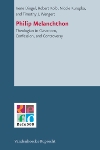 |
Kolb / Kuropka / Dingel Philip Melanchthon Theologian in Classroom, Confession, and Controversy Vandenhoeck & Ruprecht, 2012, 310 Seiten, Gebunden, 978-3-525-55047-2 120,00 EUR |
Refo500 Academic Studies
R5AS Vol 7: These twelve essays by international scholars investigate Melanchthon’s theological activities as teacher, confessor of the faith, and defender of his doctrine and ecclesiastical policies as they developed within the context of his service of society and church. In the past quarter century Melanchthon researchers have scrutinized older, mostly negative, interpretations of the Preceptor Germaniae. The editors present in this volume precisely focused appraisals of »Master Philip« in his role as theologian at the university and in the service of his own prince and others. By carefully placing his use of Aristotle, his understanding of the nature of training for pastoral ministry, his biblical exegesis in context, by analyzing four of his attempts to formulate Wittenberg teaching in public confession, by assessing how his own writings took on normative character for the church, and by tracing his thinking on the free will and the Lord’s Supper in the midst of controversy, these authors offer carefully etched portraits of Melanchthon as Preceptor ecclesiae. This volume contributes to the expansion of our understanding of Melanchthon as key figure in the Wittenberg Reformation and the currents of controversy that have long surrounded the interpretation of his contributions. Von: Irene Dingel, Robert Kolb, Nicole Kuropka, Timothy J. Wengert Inhaltsverzeichnis und Leseprobe |
||
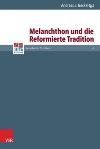 |
Andreas J. Beck Melanchthon und die Reformierte Tradition Vandenhoeck & Ruprecht, 2016, 270 Seiten, Gebunden, 978-3-525-55031-1 110,00 EUR |
Refo500 Academic Studies
R5AS Vol 6: Andreas J. Beck versammelt die Beiträge der internationalen wissenschaftlichen Tagung »Melanchthon und die Reformierte Tradition«, die vom 10.-12. November 2010 in Emden stattfand. Die Tagung wurde anlässlich Melanchthons 450. Todesjahres von der Johannes a Lasco Bibliothek Emden in Kooperation mit der Evangelisch-Theologischen Fakultät Leuven und der Europäischen Melanchthonakademie Bretten organisiert. Die einzelnen Beiträge stammen von Forschern aus Deutschland, den Niederlanden, Belgien, Frankreich, England und Ungarn und dokumentieren den bisher kaum erforschten, großen Einfluss Philip Melanchthons auf die reformierte Tradition. Einige Beiträge erörtern spezifische theologische Fragen, wie etwa das Verhältnis von Wort und Geist oder Freiheit und Wille bei Melanchthon. Andere Beiträge stellen größere Bezüge her, etwa zwischen Melanchthon und der reformierten Frömmigkeit oder der reformierten Scholastik. Außerdem thematisieren Beiträge Melanchthons Einfluss in Deutschland, der Schweiz, Frankreich, den Niederlanden und Ungarn thematisiert. Einige Beiträge zur Rezeption Melanchthons in der reformierten Tradition des 19. und 20. Jahrhunderts und ein Rückblick auf das Melanchthon-Gedenkjahr 2010 runden das Bild ab.Die beträchtliche Bedeutung Melanchthons für die reformierte Theologie, Frömmigkeit und Bildung zeigt sich nun deutlicher als in der bisherigen Forschung und stellt zugleich die einseitige Assoziation der reformierten Tradition mit Calvin in Frage. Melanchthon wirkte international über sein ausgedehntes Netzwerk mit Gelehrten und kirchlichen Leitern, seine Bildungs- und Universitätsreformen, seinen Schüler und sein überaus vielseitiges Schrifttum; er war der Lehrer Europas (Praeceptor Europae), nicht nur der Lehrer Deutschlands (Praecepter Germaniae). Dr. theol. Andreas J. Beck ist Professor für Historische Theologie der Evangelisch-Theologischen Fakultät in Leuven, Belgien. Inhaltsverzeichnis und Leseprobe |
||
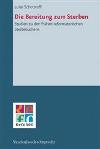 |
Luise Schottroff Die Bereitung zum Sterben Studien zu den frühen reformatorischen Sterbebüchern Vandenhoeck & Ruprecht, 2013, 142 Seiten, Gebunden, 978-3-525-55038-0 85,00 EUR |
Refo500 Academic Studies
R5AS Vol 5 Die vorreformatorischen Schriften zur Sterbekunst ("Ars moriendi") waren durch ihre Bilder und kurzen Texte bereits sehr verbreitet. Martin Luther führte diese Gattung in seinem "Sermon von der Bereitung zum Sterben" (1519, siehe WA 2) fort. Er verwendete dafür auch Gedanken aus einem 1518 anonym veröffentlichten "Libellus auro praestantior ", einem "Büchlein vorzüglicher als Gold" über die Vorbereitung für das Sterben und stellte in seiner Schrift die teuflischen Anfechtungen mit Tod, Hölle, Gottes Zorn und Sünde in den Mittelpunkt. Auf sein Traktat folgten viele Schriften von Theologen, die seine Anliegen aufnahmen. Luise Schottroff stellt diese Literatur hier erstmalig zusammen. Dr. Luise Schottroff ist evangelische Theologin. Bis 1999 war sie Professorin für Neues Testament an den Universitäten Mainz und Kassel. Von 2001 - 2005 lehrte sie an der Pacific School of Religion/Graduate Theological Union in Berkeley und am Union Theological Seminary New York, USA. Ihre Arbeitsschwerpunkte sind: Neutestamentliche Wissenschaft, Sozialgeschichtliche Theologie und Feministische Theologie. Inhaltsverzeichnis und Leseprobe |
||
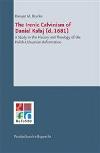 |
Dariusz Brycko The Irenic Calvinism of Daniel Kalaj (d. 1681) A Study in the History and Theology of the Polish-Lithuanian Reformation Vandenhoeck & Ruprecht, 2013, 192 Seiten, Gebunden, 978-3-525-55046-5 95,00 EUR |
Refo500 Academic Studies
R5AS Vol 4: Daniel Kalaj (d.1681) was a Polish Reformer of Hungarian background, born in Little Poland (Malopolska) and trained in Franeker, Friesland, under some of the most brilliant Reformed theologians of seventeenth-century Europe, such as Cocceius and Cloppenburgh. Kalaj’s ministry in the Reformed Church of Little Poland was abruptly interrupted when Catholic authorities wrongly accused him of spreading then-outlawed Arianism, calling him a »Calvinoarian.« Kalaj became the first Polish Protestant minister to receive a sentence of capital punishment as a result of the new anti-toleration law issued in 1658 against Arians, under the false pretext of military treason during the Second Northern War (1655–1660). He escaped the axe by fleeing to Lithuania (and later to Gdansk), where he wrote his best-known work »A Friendly Dialogue between an Evangelical Minister and a Roman Catholic Priest«. The »Friendly Dialogue« is both: Kalaj’s own personal defense and a compendium to Polish Reformed doctrine, and has a strongly irenic disposition. In contrast with many Reformed thinkers of his day, Kalaj is capable of communicating Reformed doctrine in a friendly and peaceful manner. He places special emphasis on the unity of the catholic church, as expressed in his statement that »the three churches Roman, and Lutheran, and Reformed are all part of one true church before God,« while at the same time attempting to retain his Reformed orthodoxy. Dr. theol. Dariusz M. Brycko ist Research Fellow am Center for Christian Thought der BIOLA Universität in Biola, La Mirada, CA, USA |
||
 |
Jordan J. Ballor Covenant, Casuality and Law A Study in the Theology of Wolfgang Musculus Vandenhoeck & Ruprecht, 2012, 304 Seiten, Gebunden, 978-3-525-55036-6 110,00 EUR |
Refo500 Academic Studies
R5AS Vol 3: Wolfgang Musculus as a significant figure worthy of further consideration. Jordan J. Ballor takes its point of departure in the doctrine of the covenant as it appears in the theology of the prominent second-generation reformer, Wolfgang Musculus (1497–1563), who is perhaps the earliest Reformed theologian to give the topic of the covenant a separate and distinct treatment in a collection of theological commonplaces. Musculus’ covenantal teaching is characterized by an important distinction between general and special covenants and is rooted in his exegetical work on the book of Genesis. Where Musculus’ Loci communes evidence an anti-speculative, soteriologically-focused, and pastorally-driven approach, his exegesis is intended to provide fulsome guidance in the study of Scripture. This examination of Musculus’ views on covenant and related doctrines is followed by thematically-related explorations of questions of causality and metaphysics, concluding with considerations related to law and social order. By focusing on Musculus’ theology as found both in his Loci communes, as well as in his extensive and voluminous exegetical work, and in comparison and dialogue with a host of antecedent and contemporary figures, this book is the first full-scale study to place Musculus’ theology within its broader intellectual context. Musculus’ positions with respect to doctrines connected to covenant, causality, and law embodies the eclecticism of Reformed reception of medieval traditions, and the final section of this study places Musculus within the later development of Reformed orthodoxy in the sixteenth and seventeenth centuries, finding that Wolfgang Musculus is a significant and often-overlooked figure worthy of further consideration. |
||
 |
Joar Haga Was there a Lutheran Metaphysics? The interpretation of communicatio idiomatum in Early Modern Lutheranism Vandenhoeck & Ruprecht, 2012, 304 Seiten, Gebunden, 978-3-525-55037-3 120,00 EUR |
Refo500 Academic Studies
R5AS Vol 2: Two natures of Christ and the difference between philosophy and theology. Joar Haga traces the Lutheran doctrine of communicatio idiomatum, the exchange of properties between the natures of Christ, as it developed in some important controversies of the 16th and the early 17th Century. Regarding it as the nerve of his soteriology, Luther stressed the intimacy of the two natures in Christ to such a degree that it threatened to end the peaceful relationship between theology and philosophy. At the same time as the Wittenberg reformers broke with certain strains of their philosophical heritage, they would insist that the continuation of Christ’s bodily presence was a reality in sacrament and nature (!), irreducible to a sign or to a memory. On the other hand, they did not want to be ignorant of the claims of reason. By rejecting the classic framework for a peaceful coexistence of philosophy and theology on the one hand, and insisting on Christ’s bodily reality on the other, the quest for a new concept of how philosophy and theology related was implicitly stated. Earlier research identified two traditions of Lutheran Christology: One train of thought follows Luther in emphasising the difference between philosophy and theology. This can be seen in the Tübingen solutions where Johannes Brenz and Theodor Thumm are the most interesting thinkers. Another train of thought can be found in the conservative pupils of Melanchthon, where Martin Chemnitz and Balthasar Mentzer are the most prominent theologians. This research does not merely group the thinkers within the confines of a tradition, but underlines their individual contributions to an open-ended history. Titelinformationen exportieren Ihre Meinung zu diesem Titel |
||
 |
Benjamin T. G. Mayes Counsel and Conscience Lutheran Casuistry and Moral Reasoning after the Reformation Vandenhoeck & Ruprecht, 211, 250 Seiten, Gebunden, 978-3-525-55027-4 100,00 EUR |
Refo500 Academic Studies
R5AS Vol 1: In Lutheran Germany of the post-Reformation era (ca. 1580–1750), a genre of pastoral, ethical writings arose that consisted in casuistry and in topically or thematically related theological counsels. In this first volume of the new Refo500 series Mayes shows that this casuistry literature was intended to instruct and comfort the consciences of Christians. Lutheran casuistry, related to but also distinct from Roman Catholic and Reformed counterparts, arose especially as pastors looked within Holy Scripture, the medieval tradition, and the writings of Martin Luther and other Lutheran authorities for answers to ethical problems and doctrinal disputes, and then catalogued their findings. As an extensive example from this genre Mayes examines the Thesaurus Consiliorum Et Decisionum, published in 1671 by Georg Dedekenn and Johann Ernst Gerhard. This Thesaurus was an anthology of wise advice from Lutheran theologians and jurists, published to encourage readers to avoid individualistic ethical choices and instead to engage in an “aristocratic” process of moral decision making in which one would consult the wise men of the past and present. The counsels included in the Thesaurus address inter-confessional disputes, intra-Lutheran disputes, sacraments, church government, pastoral ministry, social ethics, marriage, sexual ethics, and many other topics. The topics of divorce and remarriage, especially, show the different ways in which Lutherans reasoned about moral matters. The author shows that in the Thesaurus the Lutheran casuistry literature, which has been overlooked in most scholarship of the 20th and 21st centuries, was in bloom. It arose to meet the needs of people who had doubts, and it continued to instruct and console Christian consciences for many generations. |
||

